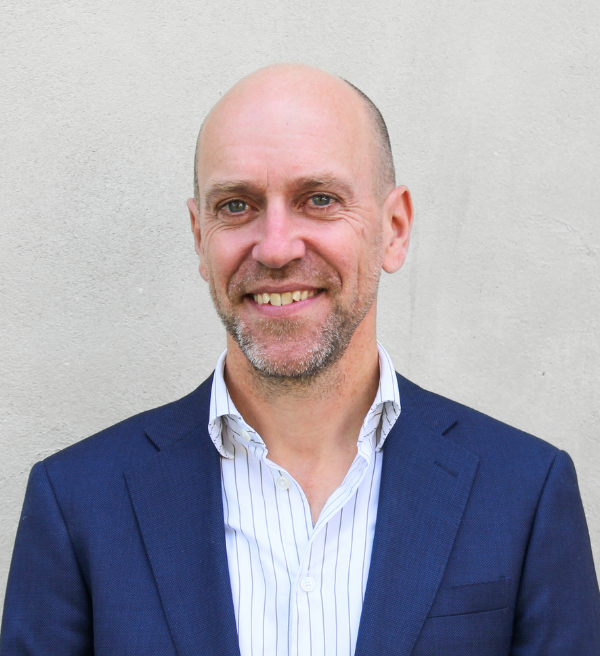
Planner and human geographer with a general interest in cross-sectoral spatial planning and governance at the urban and regional level. A recurrent research theme for Patrik is the coordination of planning activities normally based on different professional perspectives, in particular at the interface between transportation and urban planning. Methodologically, Patrik prefers a combination of qualitative and quantitative research approaches.
Senior Research Fellow
Patrik Tornberg
Spatial Story
Geography always fascinated me. Perhaps it is because I moved around between different parts of Sweden growing up. Maybe it comes from my grandfather telling me stories as a child of all the countries he had visited. It might be from learning to navigate the boat during our yearly summer vacations in the Stockholm archipelago. Of course, as a child I didn´t label these things as different aspects of geography. They were just parts of life that happened to make an impact on me.
Having done some travelling on my own after finishing school, I bounced around between different subjects at the universities in Uppsala, Stockholm and Lund. But when I realized that you could actually study geography as a university subject, everything fell into place. It became clear to me that maps were my go-to tool to make sense of things, whether understanding the challenges of urban and rural areas, identifying political interests at different levels of government, or simply just finding my way in the Stockholm archipelago or a foreign city. But I also realized the limits to maps as a source of knowledge, and the value of experiencing places to understand them. Field trips and study visits taught me how insightful it could be to see and hear the actual environment, feel the terrain under your feet, and to access the local knowledge of people with roots in a specific place.
Maps are wonderful sources of explicit knowledge, while experiences of places provide supplementary tacit knowledge. That is why I think combinations of quantitative and qualitative methods tend to form the most fruitful research approaches. To me geography is all that. And it never stops fascinating.
Publications
Tornberg, P., & Odhage, J. (2022). Back and forth between openness and focusing: handling complexity in land use and transport coordination. European Planning Studies, 30(12), 2394-2411.
Bondemark, A., Sundbergh, P., Tornberg, P., & Brundell-Freij, K. (2020). Do impact assessments influence transport plans? The case of Sweden. Transportation Research Part A: Policy and Practice, 134, 52-64.
Tornberg, P., & Odhage, J. (2018). Making transport planning more collaborative? The case of strategic choice of measures in Swedish transport planning. Transportation Research Part A: Policy and Practice, 118, 416-429.
Johansson, F., Tornberg, P., & Fernström, A. (2018). A function-oriented approach to transport planning in Sweden: Limits and possibilities from a policy perspective. Transport policy, 63, 30-38.
Tornberg, P., & Odhage, J. (2017). Making room for the simultaneous use of different rationalities in transport planning: The case of Strategic Choice of Measures in Swedish transport planning. Proceedings from the Annual Transport Conference, Trafikdage, at Aalborg University 2017.
Tornberg, P. (2012). Committed to coordination? How different forms of commitment complicate the coordination of national and urban planning. Planning Theory & Practice, 13(1), 27-45.
Tornberg, P. (2011). Making Sense of Integrated Planning. Challenges to Urban and Transport Planning Processes in Sweden. PhD Thesis. KTH Royal Institute of Technology, Stockholm.
Tornberg, P. (2010). Integration of land use and transportation planning under the canopy of a holistic plan?: An argument for process around plans. Journal of Landscape studies, 3, 147-157.
Related Research Projects
Related Publications
Related Events
Related News
Related Maps
Employment rate 2024
Unemployment rate 2024
Population outside the labour force 2024
Change in employment in industry 2014–2023
Change in employment in business services 2014–2023
Change in share of high skill occupations 2014–2023
Change in share of medium skill occupations 2014–2023
Change in share of low skill occupations 2014–2023
Sectoral employment concentration 2023
Change in enterprise deaths pandemic to post-pandemic years