20 October marks the World Statistics Day, a global celebration of the value of high-quality statistics for informed decision-making and sustainable development.
Across the Nordic Region, statistics help policymakers, researchers, and citizens understand trends shaping society. Statistics, data and figures help to trace developments in areas such as demography, migration, labour markets, sustainability, and economic performance.
How well do you know Nordic data and trends?
Are you up for a challenge? Put your knowledge to test and see how familiar you are with Nordic statistics on topics like population growth, renewable energy, life expectancy, or GDP.
Take a short quiz below!
Question 1: Population growth
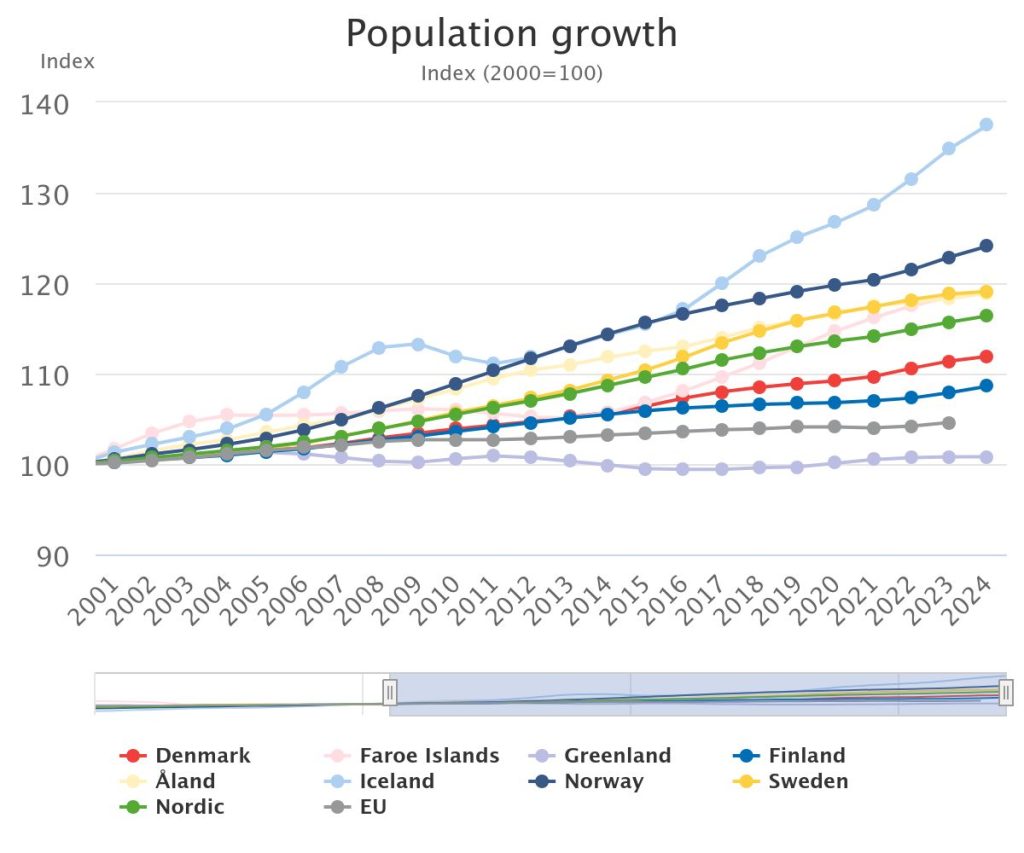
Understanding population trends helps anticipate future challenges for housing, labour markets, and public services. In the Nordic Region, population growth varies widely between countries and regions.
Which Nordic country had the highest relative population growth between 2001 and 2024?
A) Denmark
B) Iceland
C) Norway
D) Sweden
E) Finland
Question 1
See answer
Question 2: Internet access
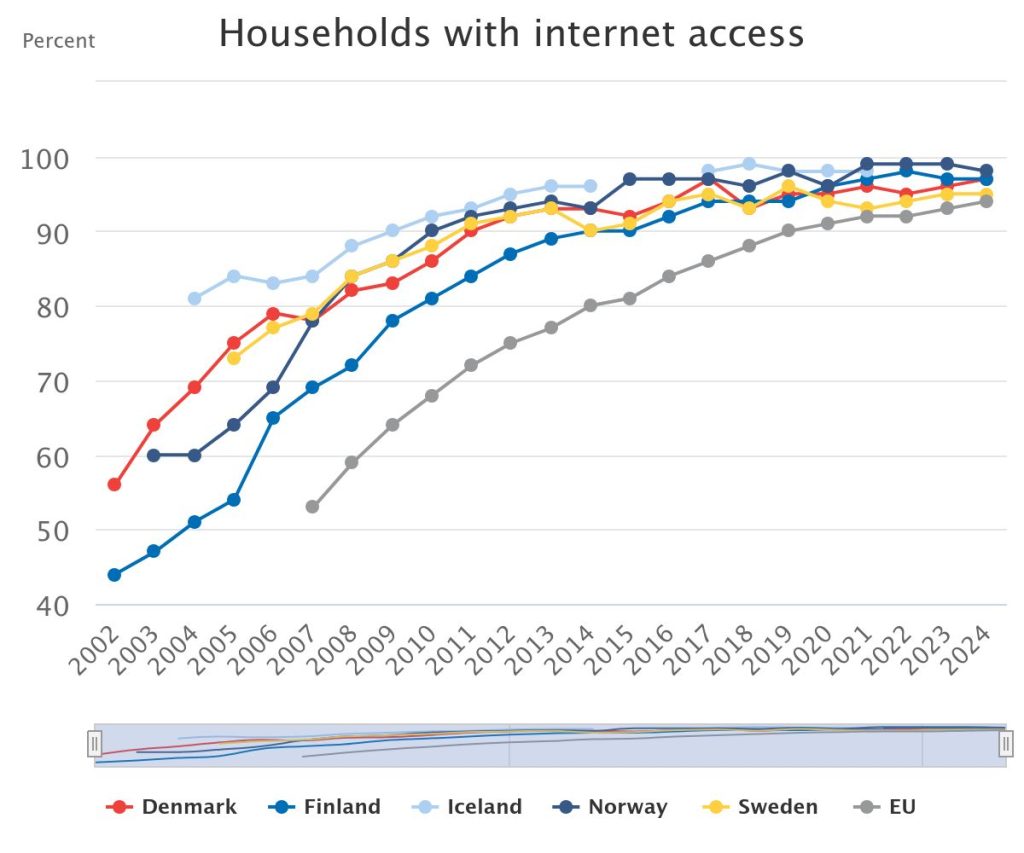
Digital connectivity is central to regional development and equal access to services. The Nordic countries are among the world’s most connected societies, but differences remain.
Which Nordic country had the highest share of households with internet access in 2024?
A) Iceland
B) Sweden
C) Norway
D) Finland
E) Denmark
Question 2
See answer
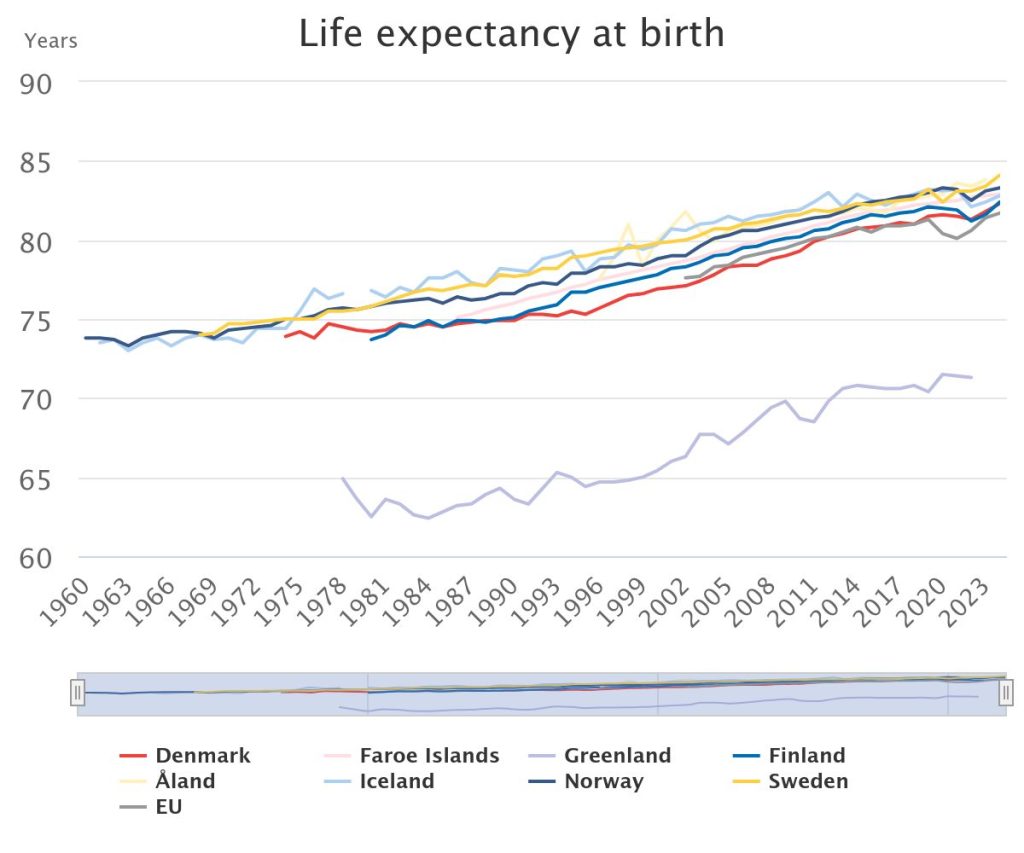
Question 3: Life expectancy
Life expectancy reflects overall population health and quality of life. After the COVID-19 pandemic, the Nordic Region has seen a steady recovery in life expectancy levels.
In 2024, Sweden had the highest life expectancy at birth among the Nordics – but how high was it?
A) 71.3 years
B) 76.2 years
C) 82.3 years
D) 84.1 years
E) 88.6 years
question 3
See answer
Question 4: Fertility rates
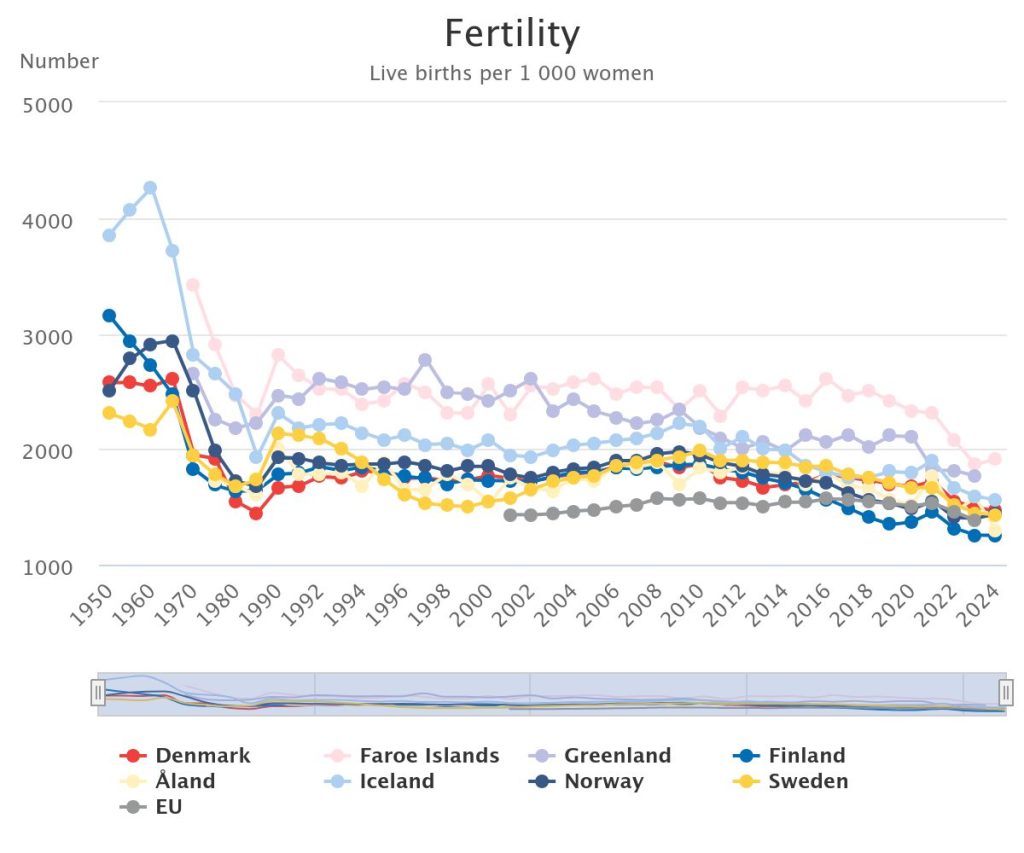
Nordic fertility trends show continuing decreases, albeit with notable national variations. Declining fertility affects population structure, ageing, and long-term sustainability of welfare systems.
Which Nordic country had the lowest fertility rate in 2024?
A) Sweden
B) Norway
C) Finland
D) Denmark
E) Iceland
Question 4
See answer
Question 5: Renewable energy
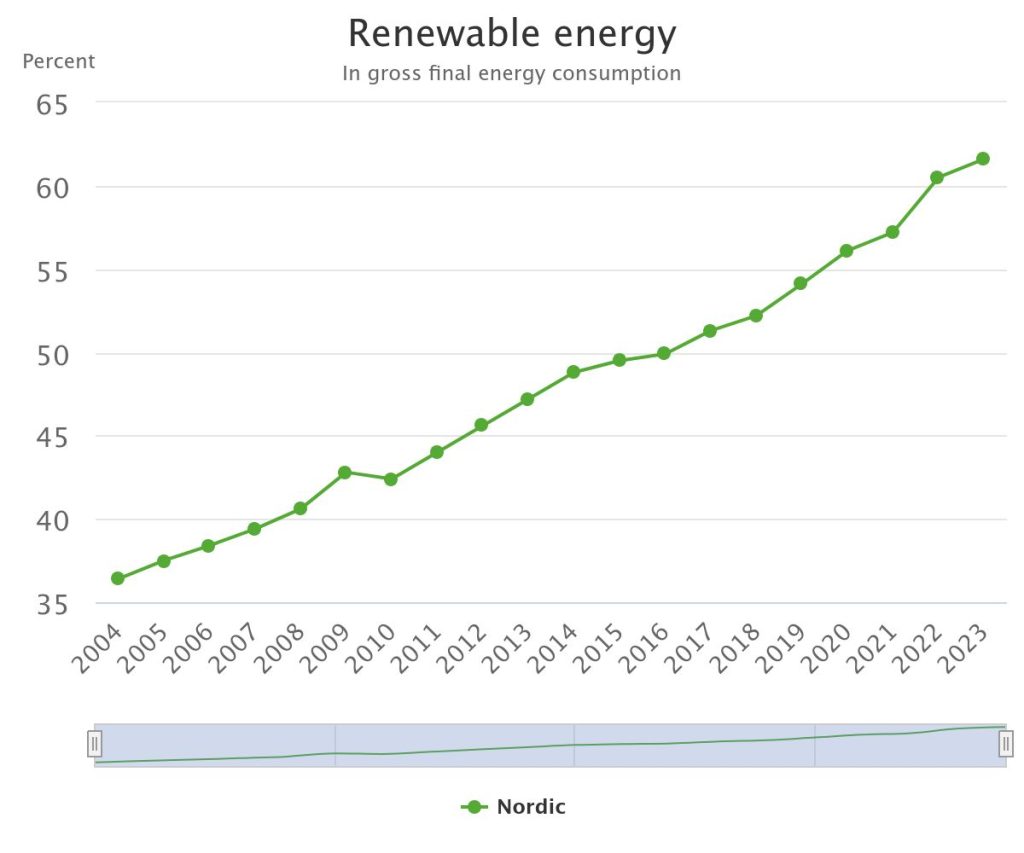
The Nordics are among leaders in renewable energy, although energy mixes differ between countries.
What was the Nordic share of energy from renewable sources in gross final energy consumption in 2023?
A) 47.6%
B) 52.4%
C) 57.8%
D) 61.6%
E) 72.3%
question 5
See answer
Question 6: GDP per capita
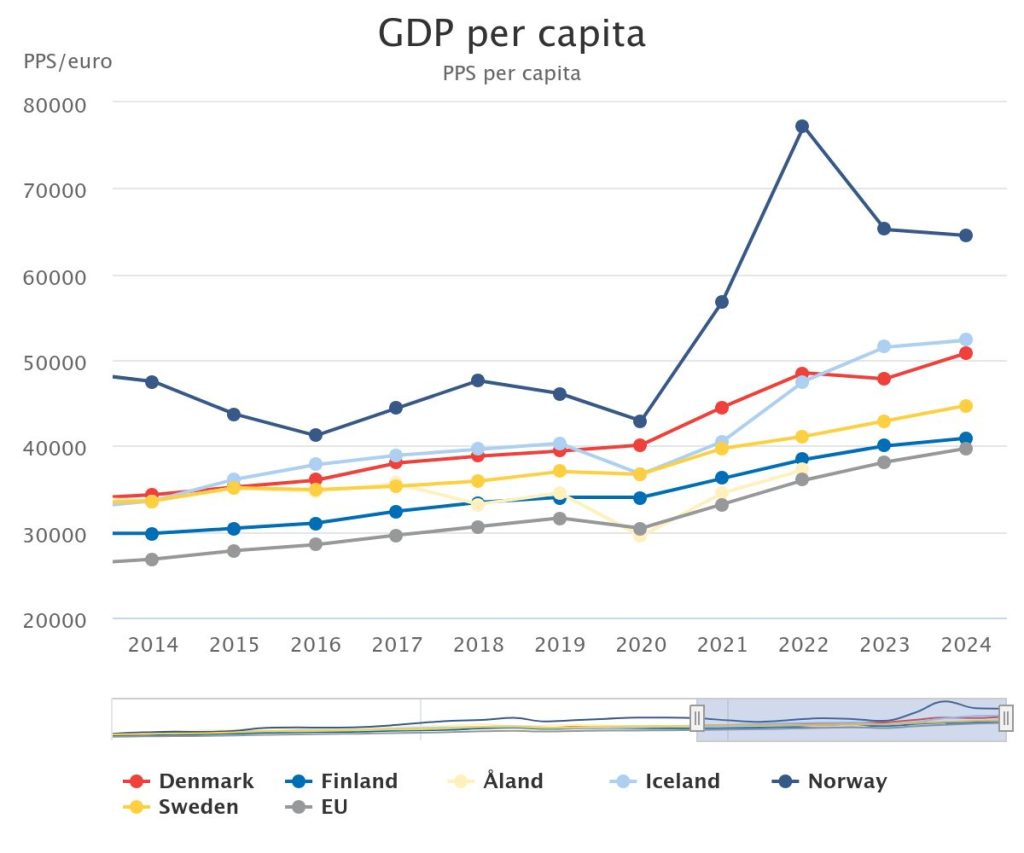
Economic performance shapes living standards and policy capacity. Comparing GDP per capita in purchasing power standards helps identify variations across the Nordic economies.
Which country had the highest GDP per capita in 2024 in the Nordic Region?
A) Finland
B) Iceland
C) Denmark
D) Sweden
E) Norway
Question 6
See answer
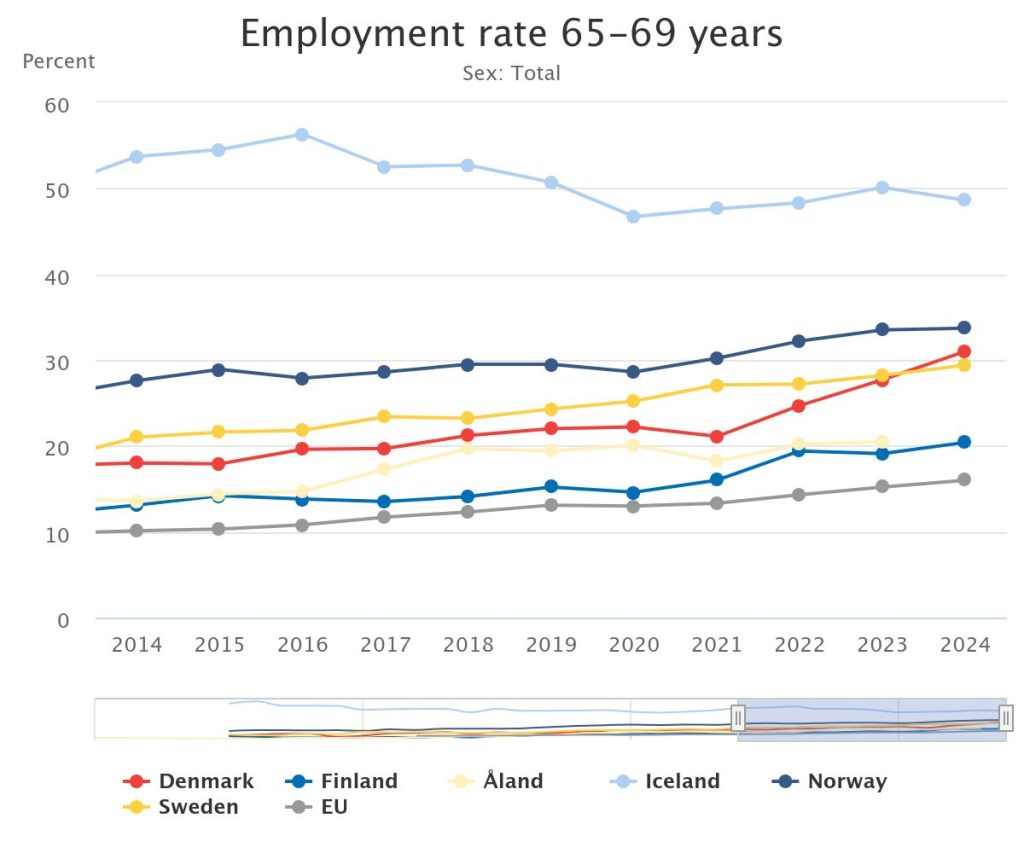
Question 7: Employment of older workers
Employment rates among older workers indicate how well labour markets adapt to ageing populations and lifelong participation in work.
Which Nordic country had the highest employment rate among 65–69-year-olds in 2024?
A) Denmark
B) Finland
C) Iceland
D) Norway
E) Sweden
question 7
See answer
Nordregio and statistics
At Nordregio, we coordinate the Nordic Statistics Database and Nordic Health and Welfare Statistics that bring together up-to-date, comparable data from across the Nordic countries. The databases offer free and easy access to datasets, indicators, and visual dashboards that help track developments over time and across borders.