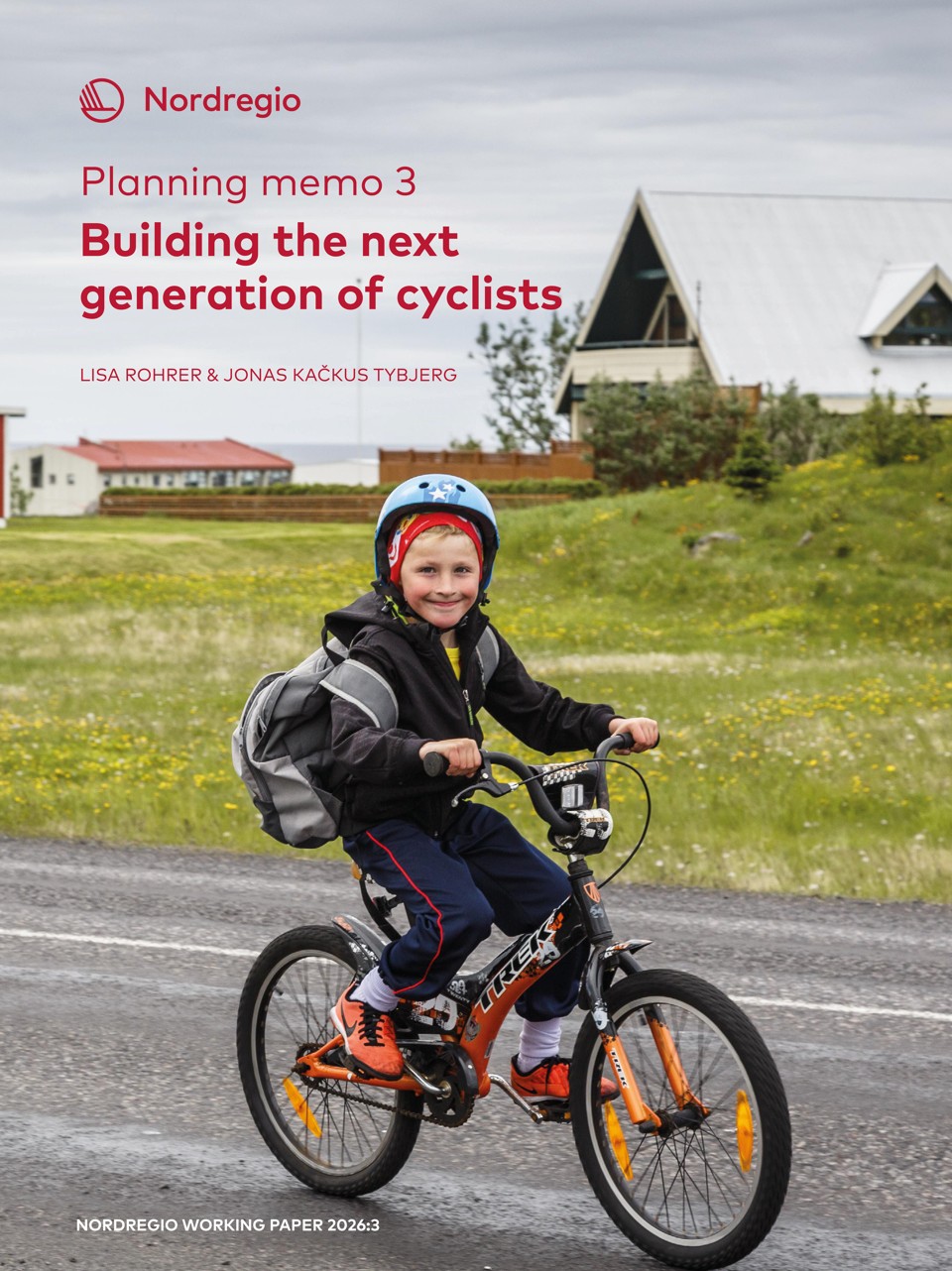
How do we keep young people cycling as they grow up? Cycling habits are shaped early but often decline during adolescence. This transition has implications for long-term mobility, public health, and climate goals. Yet older adolescents are frequently overlooked, while policies and initiatives tend to focus on younger children.
The third memo in our cycling planning series examines how cycling develops from childhood into adolescence and how it is addressed in Nordic policy and planning. It brings together insights from Nordic research, policy reviews, workshop discussions, regulatory comparisons, and selected practice examples.
Key insights
- Cycling declines with age
Older adolescents are less likely to cycle than younger age groups, particularly as alternative transport options become available - Distance matters
Cycling is most common for trips under 3–5 km and drops as distances increase - The built environment is critical
Safe, connected, and well-designed infrastructure supports active travel - Cycling is social
Peer influence and social routines shape adolescents’ mobility choices - Safety remains a barrier
Traffic concerns and inconsistent helmet use affect uptake
What can be done?
The memo highlights several considerations for planners and policymakers:
- Develop age-specific approaches that recognise differences between younger and older adolescents
- Strengthen cycling and walking networks between schools, leisure activities, and social spaces
- Address both physical infrastructure and social motivations for cycling
- Consider the impact of school location and travel distances on active mobility
- Improve coordination between public regulations and private mobility services
Overall, the findings point to the need for more targeted and integrated approaches to sustain cycling into adulthood.
About the series and the Nordic Cycle Network
This publication is the third in a series of Planning Memos developed within the Nordic Cycle Network—a network of practitioners from around 20 cities and regions across Denmark, Finland, Iceland, Norway, and Sweden. Through shared learning and exchange, the network aims to strengthen cycling policy and planning across the Nordic Region, supporting more sustainable and inclusive mobility systems.
Find the other planning memos here.