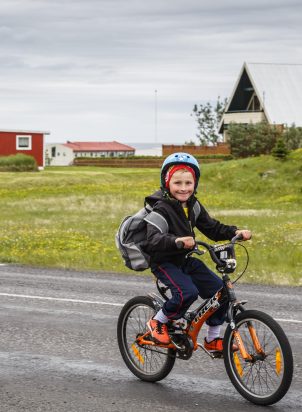
Cyclists are not a homogenous population group. While studies highlight distinctions between gender or age, there are significant nuances within such groups. When it comes to children, rapid developments from year to year makes it impossible to consider this portion of the population as a unified group, which poses a challenge for planners seeking to encourage young people to cycle through their teenage years and into adulthood. While young children’s mobility patterns are heavily influenced by their parents, pre-teens and teenagers, in their growing agency, also gain more freedoms and opportunities to move through their living environments as they choose.
This planning memo focuses on the unique and dynamic aspects of adolescents in cycling within the Nordic Region. In this publication, we provide:
- review of Nordic-based academic studies on adolescents and their mobility trends and behaviours
- summary of how several Nordic cities and regions have considered this age group within their cycling strategies
- cross-Nordic comparisons with regards to legal age restrictions and other regulations that can be both a support and a barrier to adolescent cyclists and micro-mobility users
- key takeaways for planning and policymaking
This is the third publication in a series summarising research and policy concerning bicycle planning in the Nordic countries. With each memo, we provide practitioners, policymakers, researchers, and other actors with insights from academia, highlights from Nordic cycling strategies, and other relevant findings to support informed decision-making for transport planning in the Nordic Region.
The content of this memo was developed based on desk research as well as inputs from an online workshop held in February 2026 among the Nordic Cycle Network—a network of practitioners from around 20 cities and regions across Denmark, Finland, Iceland, Norway, and Sweden.