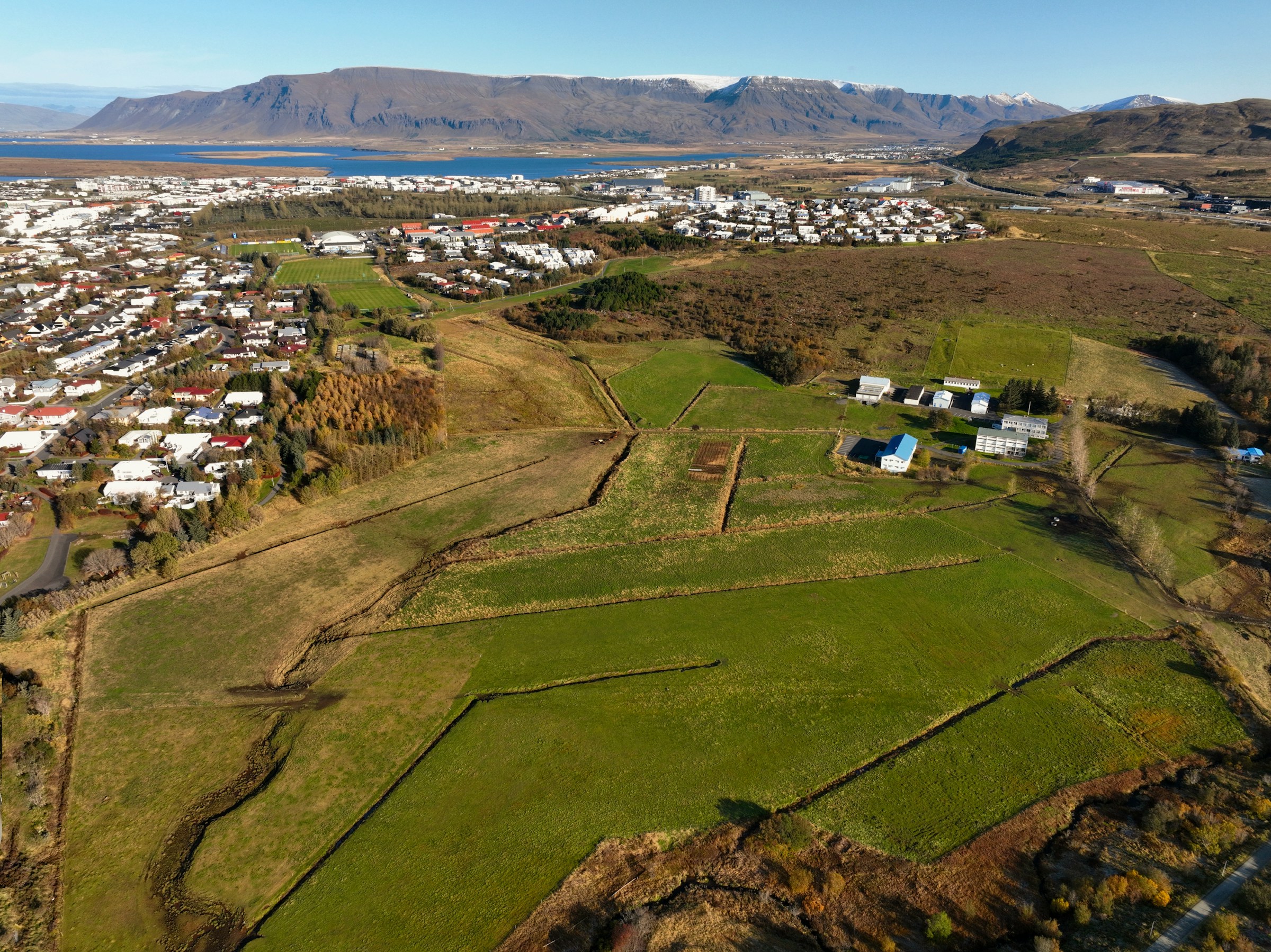
Housing, industry, renewable energy, agriculture, transport and nature all require land. International and European policies increasingly call for more sustainable use of land and soil. How are the Nordic countries approaching the challenge of land take?
A new Nordregio publication, A Nordic perspective on governing land take, examines how Denmark, Finland, Iceland, Norway and Sweden currently facilitate land take reduction ambitions through land-use planning and governance. The memo identifies important aspirations and actions that can be understood as related to land sparing in the Nordic context. It outlines the strategic orientations and broader governance mechanisms that either support or constrain reductions in net land take.
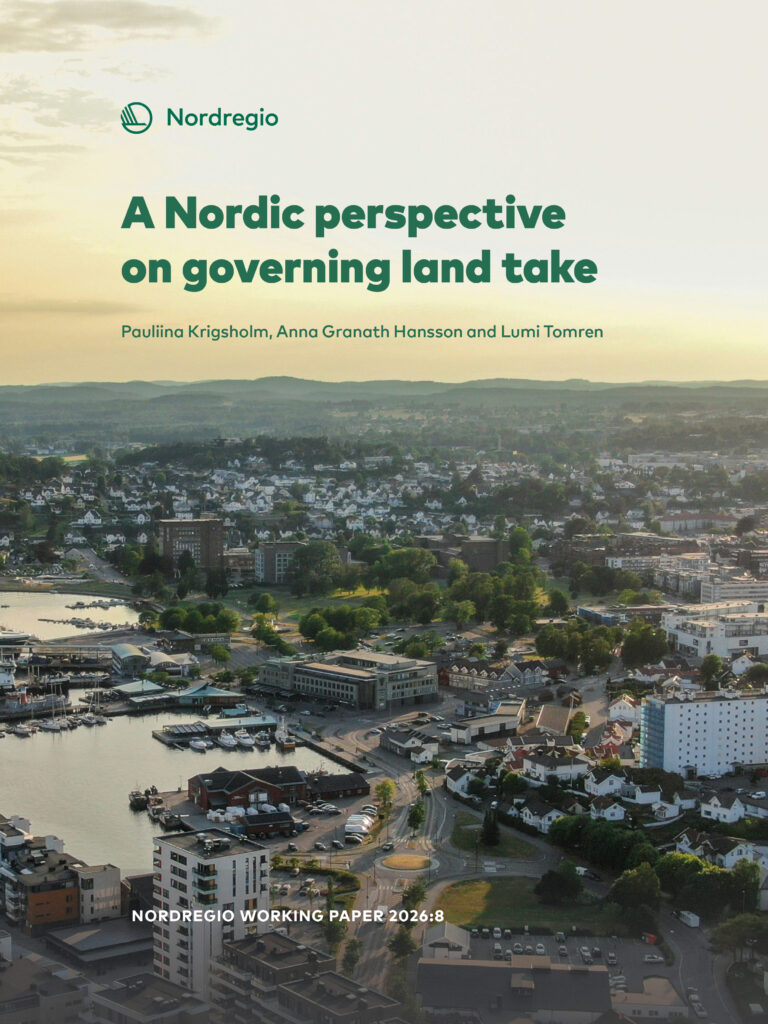
The first memo in the research project No Net Land Take and alternative nature-positive strategies, funded by the Nordic Council of Ministers, reflects on the emerging “land sparing agenda” from a Nordic planning and land governance perspective.
The EU has set a non-binding goal of reducing net land take to zero by 2050. In broad terms, advancing this goal requires reducing the amount of land converted to artificial land-use forms and increasing the amount of land restored or returned to a more natural state. The Nordic countries have not set their own national targets specifically for reducing land take. However, they already have policies that can contribute to similar objectives, including the protection of nature and farmland, promoting urban densification and reusing developed land instead of expanding into undeveloped areas.
“The Nordic countries already have many policies and initiatives that can contribute to land sparing, even though land take is not yet widely established as a distinct policy issue,” says Pauliina Krigsholm, Senior Research Fellow at Nordregio.
Land take is a cross-cutting issue
Demand for land comes from many sectors. In addition to housing development and urban expansion, land is needed for roads and infrastructure, industry, agriculture, forestry, renewable energy, tourism and other activities. Different policy objectives can create competing demands.
The memo points to the importance of considering land take across policy areas and identifying trade-offs and potential synergies between different forms of land use. The challenge is not simply whether relevant policies exist, but how they work together across sectors and levels of government.
Local decisions and wider consequences
The Nordic countries have highly decentralised planning systems. Municipalities have considerable autonomy to decide how land is used. This can create opportunities for ambitious local approaches. At the same time, municipalities may compete with each other to attract businesses, housing or holiday homes. Decisions made in one municipality can affect neighbouring municipalities and the wider region.
“Land-use decisions are often made locally, but from land take perspective their consequences extend across municipal and administrative boundaries. Coordination and cooperation across levels of government are therefore important in advancing land take reduction ambitions ,” Krigsholm says.
The memo also highlights that the amount of land taken does not tell the whole story. Developing fertile farmland, wetlands or forests can have very different environmental and socio-economic impacts, depending on the land’s characteristics, functions and location. Focusing only on narrow land-take metrics can give an incomplete picture of the consequences.
A first step in a wider Nordic research project
The memo is part part of the research project No Net Land Take and alternative nature positive strategies. It offers an overview of how the Nordic countries are responding to the emerging land-sparing agenda. It explains key concepts around land take, summarises relevant international and EU policies, and reviews existing Nordic planning and land-use policies.
The memo uses a mitigation hierarchy for considering how land take can be addressed:
- avoid new land take where possible,
- reuse already developed land,
- minimise the impacts of taking or sealing land, and
- compensate for land taken or sealed.
The next stages of the project will examine how these approaches work in practice, especially in urban fringes and rural areas in different Nordic contexts. This includes a more detailed investigation of multi-level governance responses to the land sparing agenda and sustainable land management practices.
This work is a part of the Nordic thematic group for land use, prioritisation and planning. The Nordic thematic groups contribute to the Nordic Co-operation Programme for Regional Development and Planning 2025-2030 under the Nordic Council of Ministers’ Committee of Senior Officials for Regional Policy (EK-R).