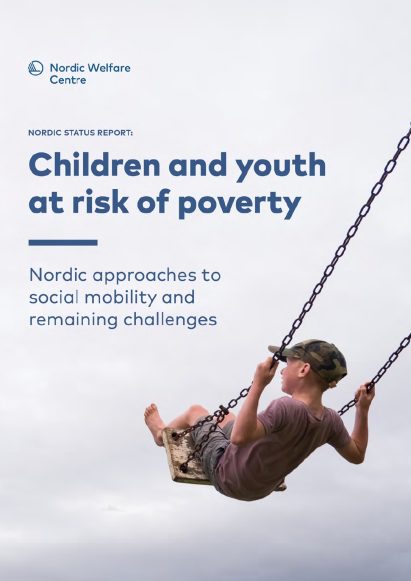
This Nordic status report examines how growing up in a family with a persistently low income may affect the opportunities of children and young people in the Nordic Region, and how this can be mitigated to promote inclusion.
Although poverty risk is an income-based indicator, low income often translates into limited participation and reduced social inclusion. Effective responses need to combine income security with inclusive, high-quality services that remove barriers and strengthen children’s everyday participation. Support should be provided to all families in need, and particular attention should be given to groups that are more at risk of poverty, such as single-parent households, large families, households with low work intensity, and children with an immigrant or refugee background.
The report is designed for ministries, agencies, municipalities, and professional communities. It has three aims:
- Monitoring and understanding risk
- Identifying solutions
- Bringing forward children’s voices
The study has been developed by the Nordic Welfare Centre at the request of the Nordic Council and the Nordic Council of Ministers. Nordregio researchers contributed to the report by writing chapter 2 – Child poverty trends in the Nordic countries: A two-decade review.
The Chapter analyses two decades of harmonised Eurostat data to track trends in at‑risk‑of‑poverty rates, work‑intensity patterns, material and social deprivation, and parental education across the Nordic Region. It highlights clear differences between countries and regions, and shows how income, work intensity, family structure, and education interact to shape risk. The chapter also discusses data gaps, sampling uncertainty, and breaks in time series, underscoring the need for transparent communication and improved disaggregation in Nordic monitoring.