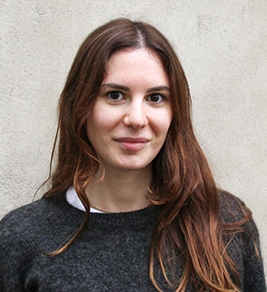
Kamila is an engineer and data analyst with an academic background in social quantitative research. Her research interests focus on uneven regional development and the spatial dimensions of social and economic inequalities. She is particularly interested in using data, interactive maps, and visual interfaces to explore and communicate complex spatial processes.
Cartographer/GIS Analyst
Kamila Dzhavatova
Spatial Story
I have long been interested in maps not only as representations of space, but as ways of thinking about it. My own spatial story began in Moscow, where I grew up surrounded by the scale and density of a vast metropolitan centre. Later, living in Oslo and travelling across Scandinavia introduced me to another geography: long distances, small settlements, peripheral places, and landscapes where connection, or its absence, becomes part of everyday life. Eventually, my work with Nordregio brought me to Stockholm, where these experiences became questions about how places develop, connect, and change.
Moving between these geographies made me aware of the distance between the map and the territory. On a map, regions appear continuous and equally present, while lived space is rarely so even. Some places are shaped by movement, investment, and anticipation; others by departure, distance, or the traces of what once was.
This tension draws me to regional development, particularly uneven development. I am interested in how places can exist within the same geographical moment while seemingly belonging to different times. Development does not arrive everywhere at once. It creates new connections, leaves traces behind, and sometimes leaves places waiting for futures that never quite arrive.
Working with maps has made this question especially compelling to me. Maps can reveal patterns of connection and inequality while making an uneven world appear coherent, and I am interested in how they can make these differences visible.
Related Research Projects
Finished
Territorial governance of non-standard geographies – Nostageo State of the Nordic Region Strategies to address rural labour shortage Giving Rural Actors Novel data and re-Useable tools to Lead public Action in Rural areas (GRANULAR) Ensuring inclusive economic growth in the transition to a green economy (EnIGG)Related Publications
Related Events
Related News
Related Maps
Nordic urban-rural typology
Household disposable income change 2018-2022
Household disposable income 2022
Regional GHG emissions per capita in 2021 and change 2017-2021 on a territorial basis
Change in the number of business bankruptcies (2020–2022)
Gini coefficient change 2018-2022
Gini coefficient for disposable income in 2022
Voting turnout in national elections