This working paper explores psychological (or mental) resilience, the ability of individuals and communities to adapt to, withstand, and recover from shocks.
Drawing on Nordic research and policy, the paper takes an exploratory approach for understanding this relatively new policy term. It presents the concept and its links to preparedness and total security thinking. It also shows how serious gaming can be used as a tool for understanding the concept in action.
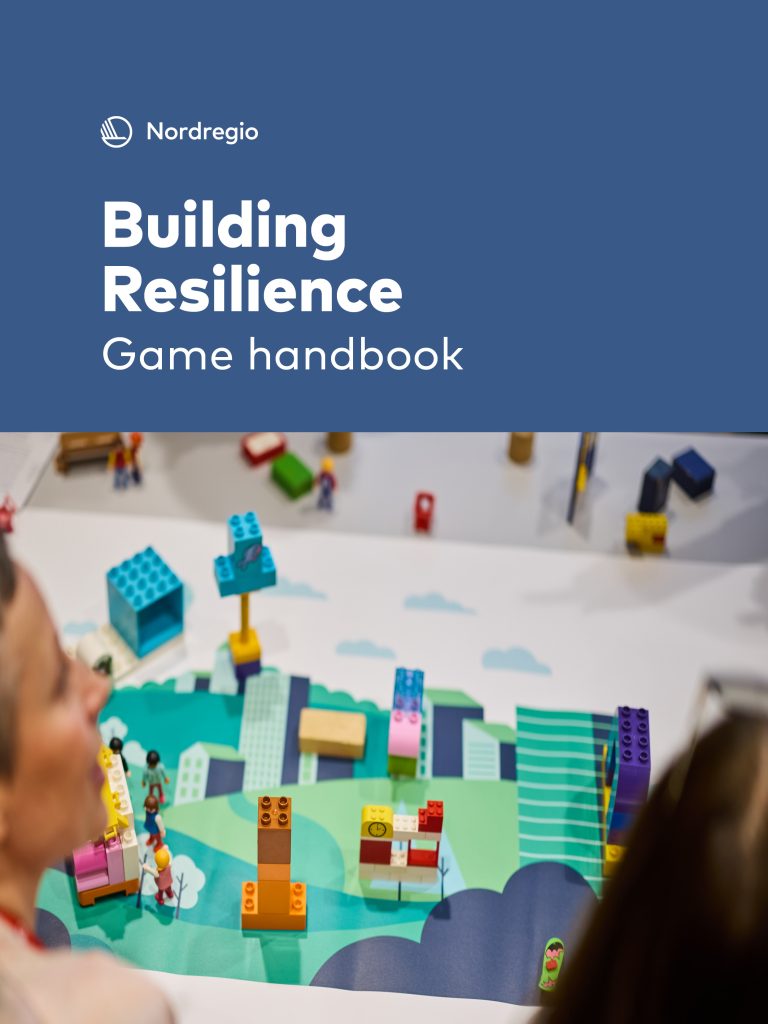
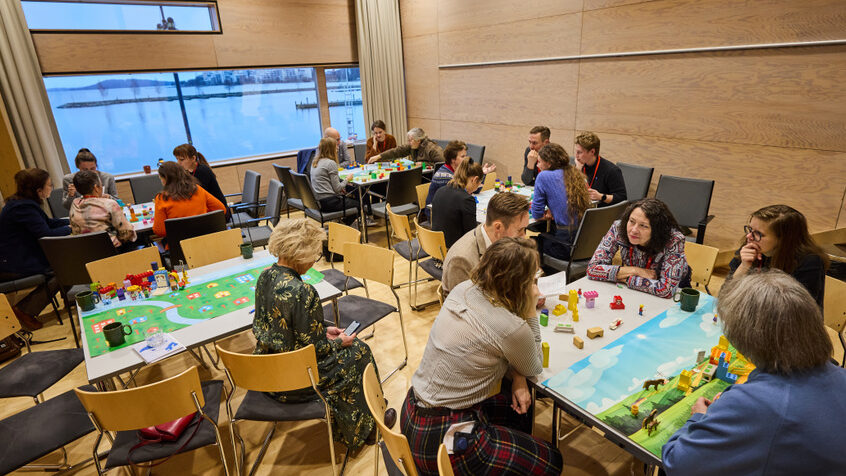
The paper shares insights from the Building Resilience game, a scenario-based exercise played at Nordregio Forum 2025, where policymakers and regional practitioners explored crisis decision-making in realistic community settings.
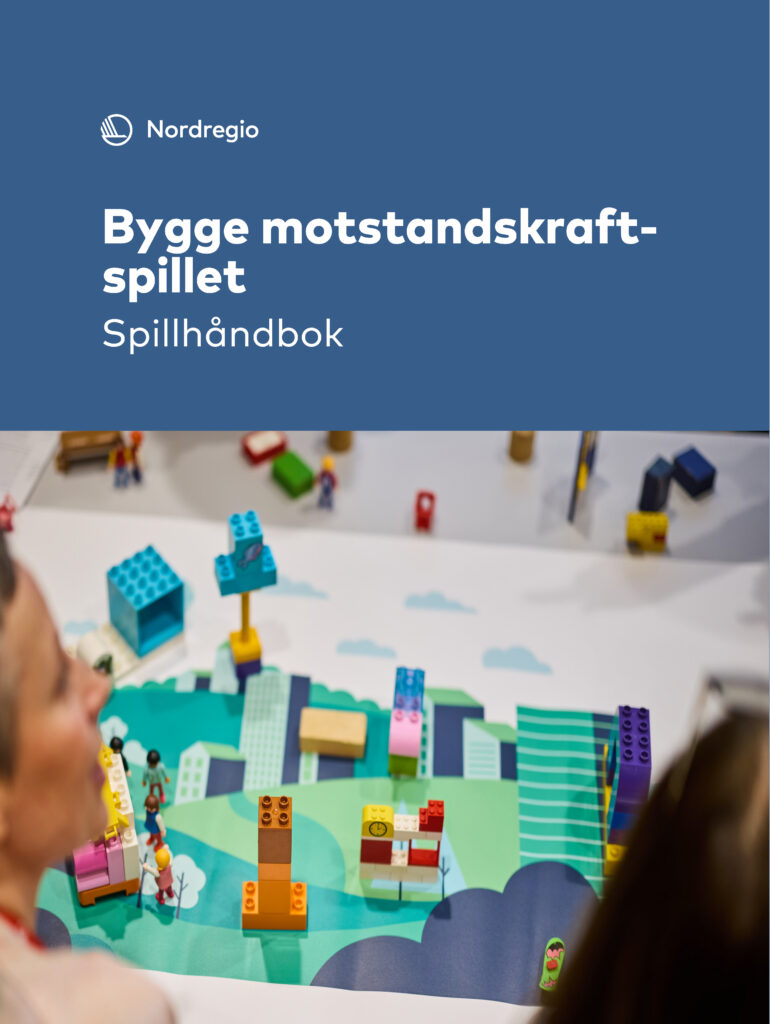
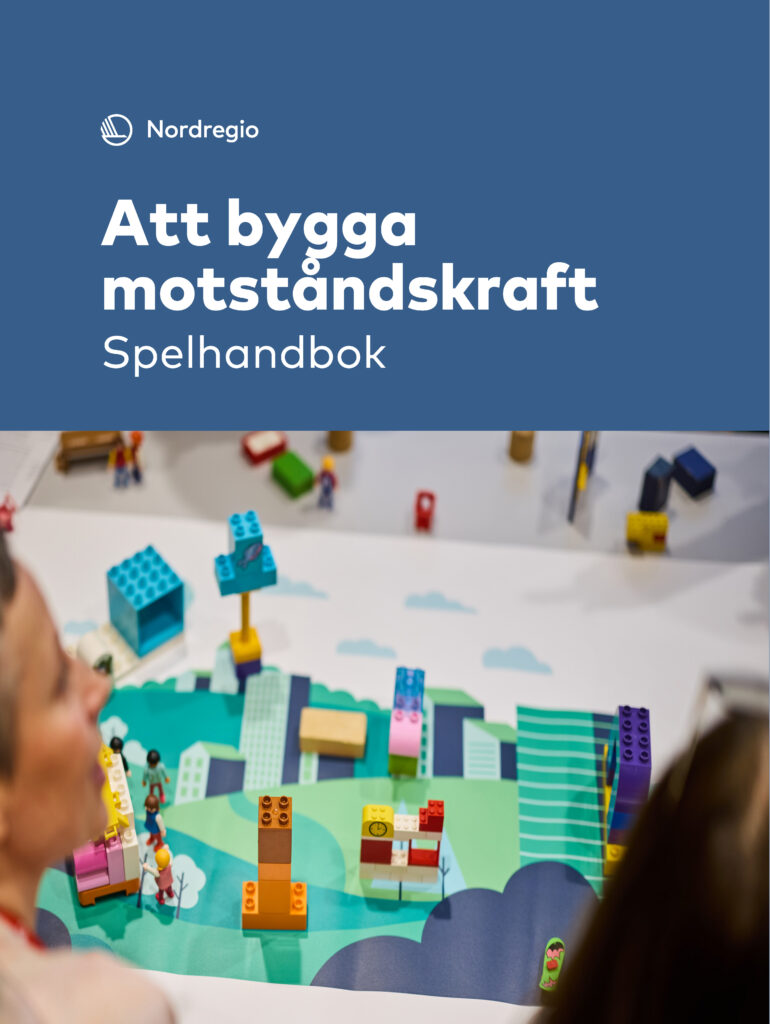
The publication includes a game handbook with five different scenarios and facilitation notes. Test the exercise yourself and reflect on resilience in your own context.
Key insights
- Trust, community networks, and social infrastructure are essential for resilience
- Public spaces such as schools, libraries, and community centres act as key hubs during crises
- Informal networks are particularly important in smaller communities
- Scenario-based gaming encourages practical reflection on crisis preparedness and response
This working paper has been produced under the project Recognising and Supporting Psychological Resilience funded by the Nordic Council of Ministers. The paper combines research, practical exercises, and guidance for regional and local actors seeking to build stronger, more adaptable communities.
Test it yourself: game handbook in Nordic languages
As a part of the working paper, you get access to a ready-to-use game handbook to run your own session of the ‘Building Resilience‘ game.
The working paper includes an English version of the facilitation notes and game scenarios.
The game handbook is also available in Nordic languages. Download your copy in Danish, Finnish, Icelandic, Norwegian, or Swedish, gather a group of people and put your own resilience to test.