There are easier places to hold a regional policy meeting than Sogndal. There are places with shorter transfers, fewer ferries and less weather to discuss. But that was also the point.
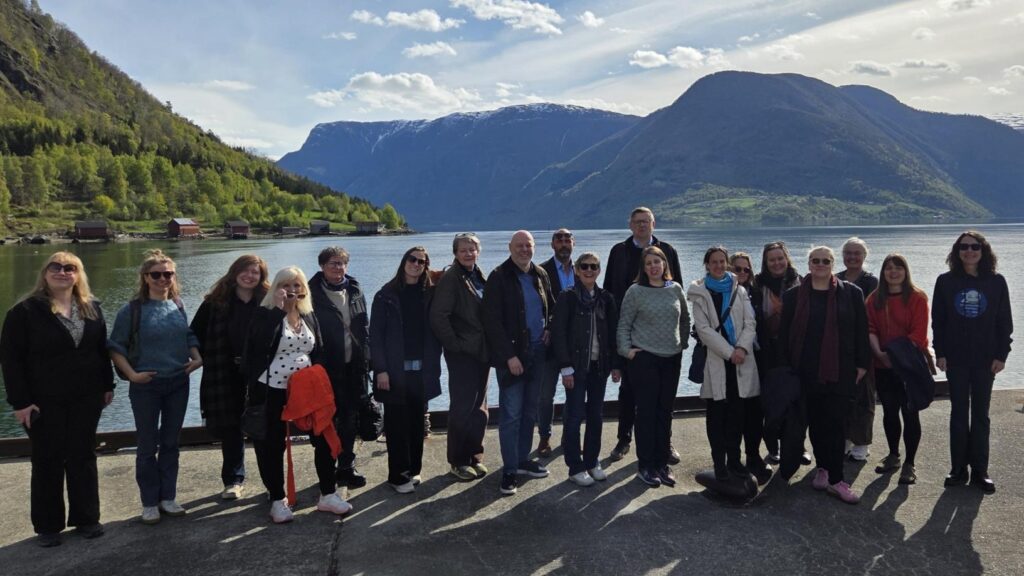
When Nordregio’s Thematic Group on Regional and Local Resilience and Attractiveness met in Sogndal on 7–8 May, the setting was not a backdrop. It was part of the programme. Here, in a rural region shaped by fjords, mountains, tunnels, ferries, tourism, fruit farming and natural hazards, many of the big Nordic policy questions were suddenly less abstract.
What does preparedness mean when a landslide can close a road? How do you stay attractive to young people without becoming overrun by visitors? How do small municipalities plan for crises, demographic change and service delivery at the same time?
These are not questions that can be fully understood from a meeting room in a capital city.
Learning from the place itself
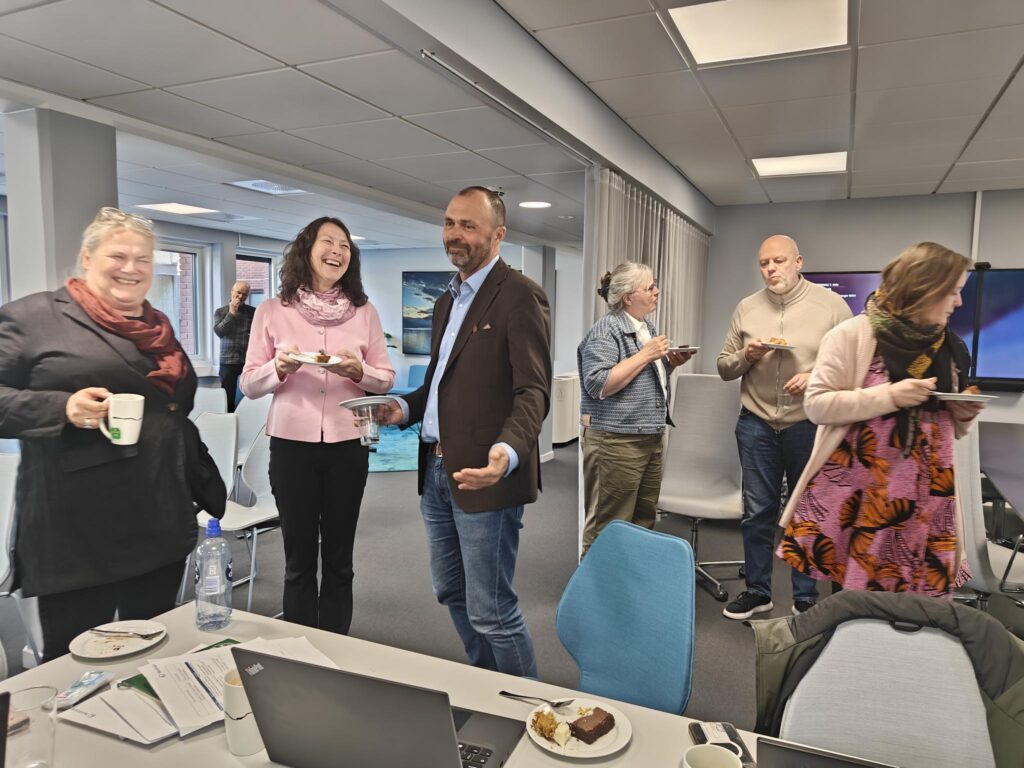
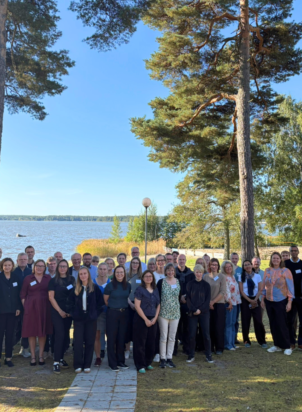
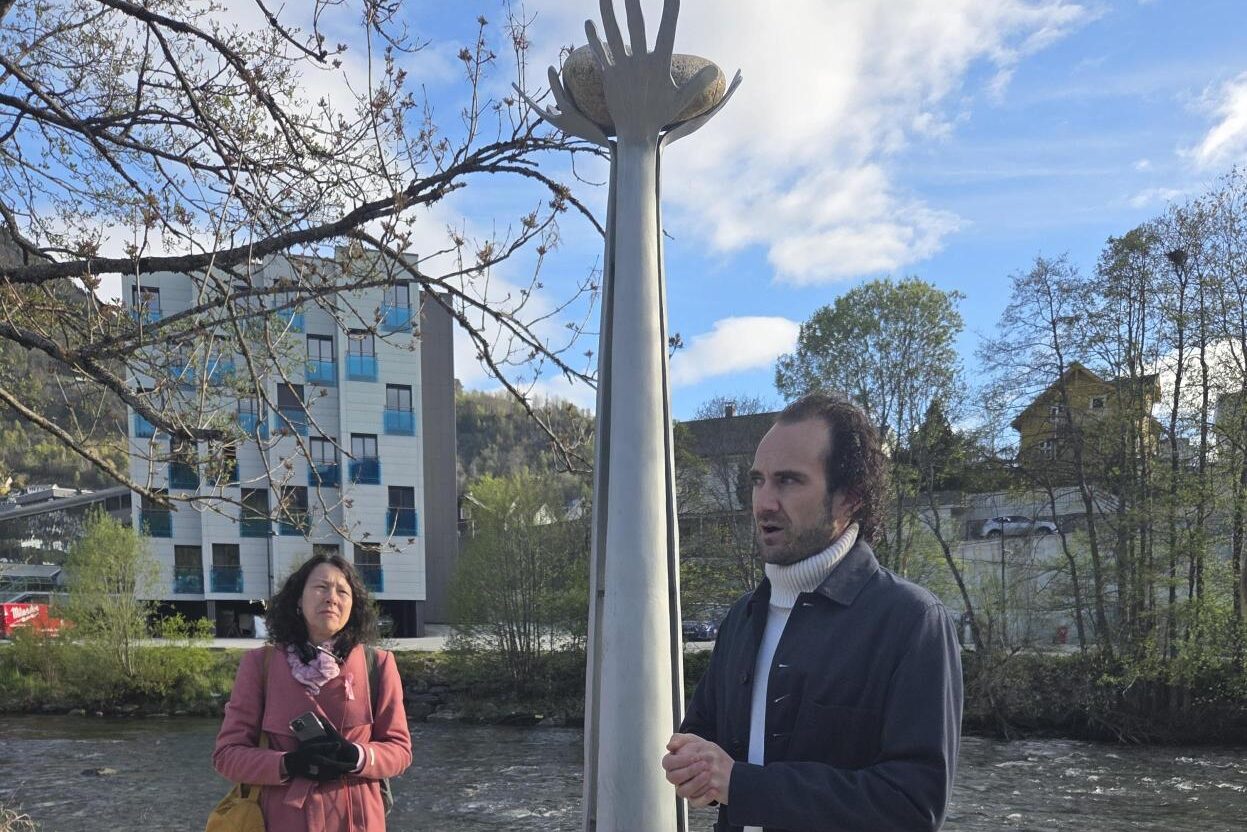
The gathering brought together regional representatives, civil servants, government actors and Nordregio researchers from across the Nordic countries. The aim was to exchange knowledge on rural development, civil preparedness, youth participation and local attractiveness, but also to learn directly from the place itself.
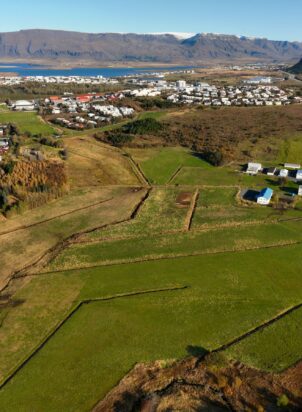
The first morning began with a walk along the fjord path in Sogndal, with reflections on how the municipality has worked to become an attractive place to live. Sogndal is rural, but not passive. It has developed around education, public administration, local business, outdoor life and a strong sense of place. In the meeting material, Sogndal is described as something of a “black swan” in rural Norway, standing out for its ability to attract young in-movers.
From there, the group moved to Leikanger, where the formal programme opened with “News of the Nordics”. Around the table, participants shared current developments from Sweden, Finland, Norway, Åland, Denmark and Iceland. The themes were familiar across borders: rural policy reforms, pressure on municipal budgets, ageing populations, school closures, uncertain EU funding, preparedness, spatial planning and the search for more sustainable local economies.
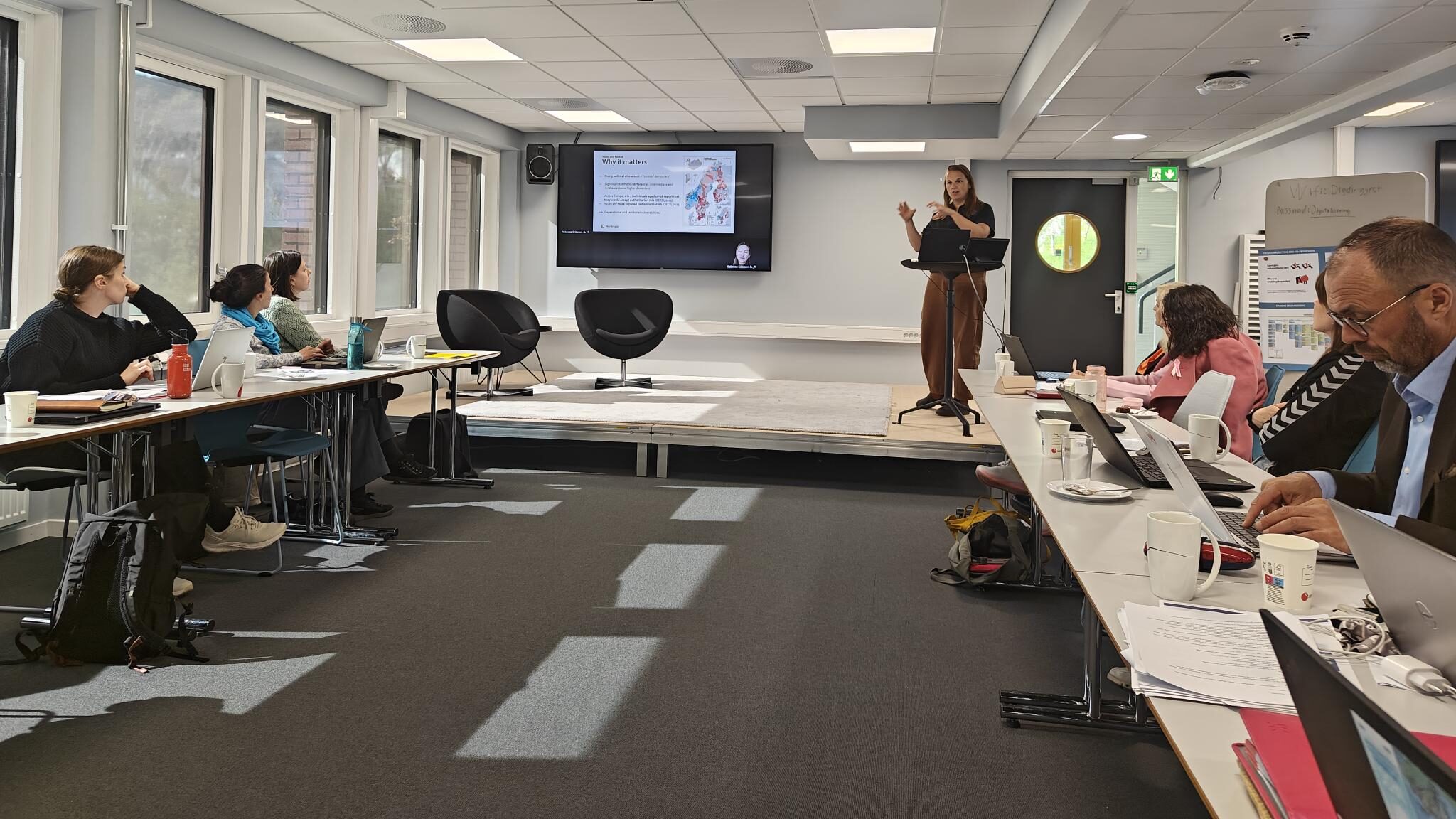
Yet the details differed. Finland is now working on the implementation of its new rural policy, with preparedness high on the agenda, especially in eastern border regions. In Norway, programmes such as Bygdevekst are testing more bottom-up ways for municipalities to meet the state directly.
In Denmark, village-level preparedness and rural development have gained political attention, though often through a top-down agricultural lens. In Iceland, new research suggests that hybrid work could have significant regional development potential, if workplaces, managers and local communities are ready to support it.
This is where the Nordic format matters. The problems are shared, but not identical. A policy idea from one country rarely transfers neatly to another. But a question does. So does a warning. So does a practical model.
Preparedness is everyday work
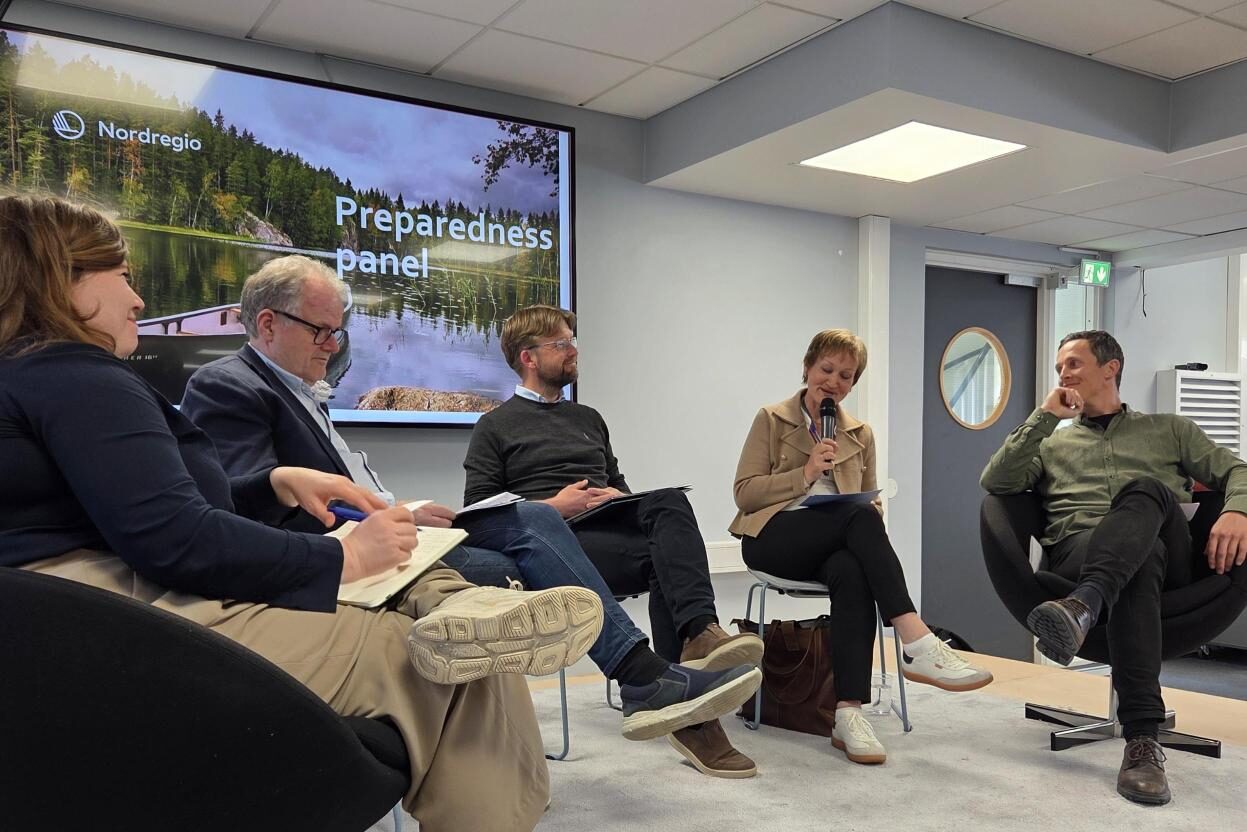
The preparedness panel made that clear.
Local and regional actors from Sogndal Municipality, Vestland County and the County Governor’s office spoke about preparedness not as a theoretical system, but as daily administration. Roads, tunnels, buses, schools, evacuation plans, water, power, communication and public expectations all entered the discussion. The speakers came from different parts of the system: Halvard Gjerde, Preparedness Manager in Sogndal Municipality; Dina Johanne Lefdal, Director of Infrastructure and Road Management in Vestland County; Sondre Lekve Bjelle, Head Coordinator of Safety and Emergency Preparedness in Vestland County; and Haavard Stensvand, Head of Emergency Planning at the County Governor of Sogn and Fjordane.
From the County Governor’s perspective, Haavard Stensvand described a clear shift in the preparedness agenda. For many years, local and regional planning in Norway was strongly shaped by extreme weather and natural hazards. Now, the mindset is changing.
“We are moving from a time of deep peace into a situation where we also have to think about the possibility of war,” he said, pointing to the need for exercises, crisis management teams and stronger coordination between civilian authorities and the Armed Forces. But he also stressed that preparedness is not only about military scenarios. It is about knowing what to do when the unexpected happens. “The actors must know what to do,” he said, underlining the importance of regular exercises in municipalities, local preparedness councils and cooperation with emergency services.
For Halvard Gjerde in Sogndal Municipality, preparedness is very close to everyday life. His work is not only about plans and risk analysis, but about the services residents rely on when a crisis hits. “I deal more with everyday life for citizens and the services that are affected by crisis,” he explained. “I am very close to the needs and expectations of the people.” In Sogndal, the most visible risks are not abstract. Flooding is not the main concern. Avalanches are. Halvard described how snow can arrive quickly and heavily, with several avalanches affecting the same place. Yet he also warned against thinking only about the risks that can be seen or touched.
“Risks are not controlled by borders,” he said. “And we can’t feel and touch all of them.”
Cyber risks, disinformation and young people’s vulnerability online were raised as part of the same preparedness picture. In one of the panel’s sharper reflections, Halvard suggested that losing young people to harmful digital environments may be “more dangerous than avalanches” when looking 50 years into the future.
For Dina Johanne Lefdal, the preparedness challenge is built into the infrastructure of Vestland itself. The county is responsible for thousands of kilometres of roads, hundreds of tunnels and bridges, and communities where weather-related disruptions are part of normal life. She described a system that must constantly deal with accidents, closures, weather and repairs, while also trying to prepare for larger future risks. “Everyday incidents take up more space than bigger risks,” she said. The difficulty, she argued, is that expectations are often higher than the system can realistically meet. Climate change is increasing the need for more resilient infrastructure, but budgets and capacity do not match the scale of the task. “We would like more economic muscle to prepare for more risks,” she said. “Rebuilding takes much more time than anyone thinks.”
Sondre Lekve Bjelle brought in the regional service perspective. Vestland County’s preparedness work includes bus operations, fire safety, civil evacuation planning and schools. He pointed to a difficult tension in public policy: different regulations can pull in different directions. For example, climate requirements for zero-emission transport can clash with preparedness requirements for sufficient transport capacity. He also highlighted cooperation and information-sharing as persistent weak points, not only before a crisis, but after it. “Lack of cooperation across government levels and information sharing is a barrier,” he said. Schools, he argued, are among the most important arenas for long-term resilience. They are not only service institutions, but places where young people can learn to understand risk, misinformation and the demands of living in a more uncertain society.
A recurring theme across the panel was the gap between public expectations and crisis reality. The speakers were clear that authorities cannot guarantee normal service levels in all situations. That makes communication, trust and individual preparedness central. “Self-preparedness is the ultimate defence,” Haavaard said. A power outage was mentioned as one simple example. It is only when electricity disappears that many people realise how vulnerable everyday life has become. The panel also reflected on the pandemic as a reminder that even well-known risks can expose deep weaknesses. As Stensvand noted, a pandemic had long been high on the list of expected crisis scenarios, and still society was not fully prepared.
The discussion then moved into questions that felt particularly relevant for rural municipalities. Are rural communities better equipped to manage crises because residents are more used to coping on their own? Or can too much reliance on voluntary effort become a problem in itself? How much does individualism weaken preparedness? And how honest can government be about what people should expect when systems are under pressure?
One answer from the panel was that preparedness depends on a careful balance. Authorities need to build local capacity without exhausting the willingness to volunteer. They need to strengthen self-preparedness without shifting responsibility away from public systems. And they need to communicate more clearly about limits.
As one panelist put it, public authorities must become better at “honesty in government services”. That may be the clearest lesson from the Sogndal discussion. Preparedness is not only a plan for the worst day. It is the everyday work of building realistic expectations, reliable relationships and systems that can bend without breaking.
Young people are not the problem
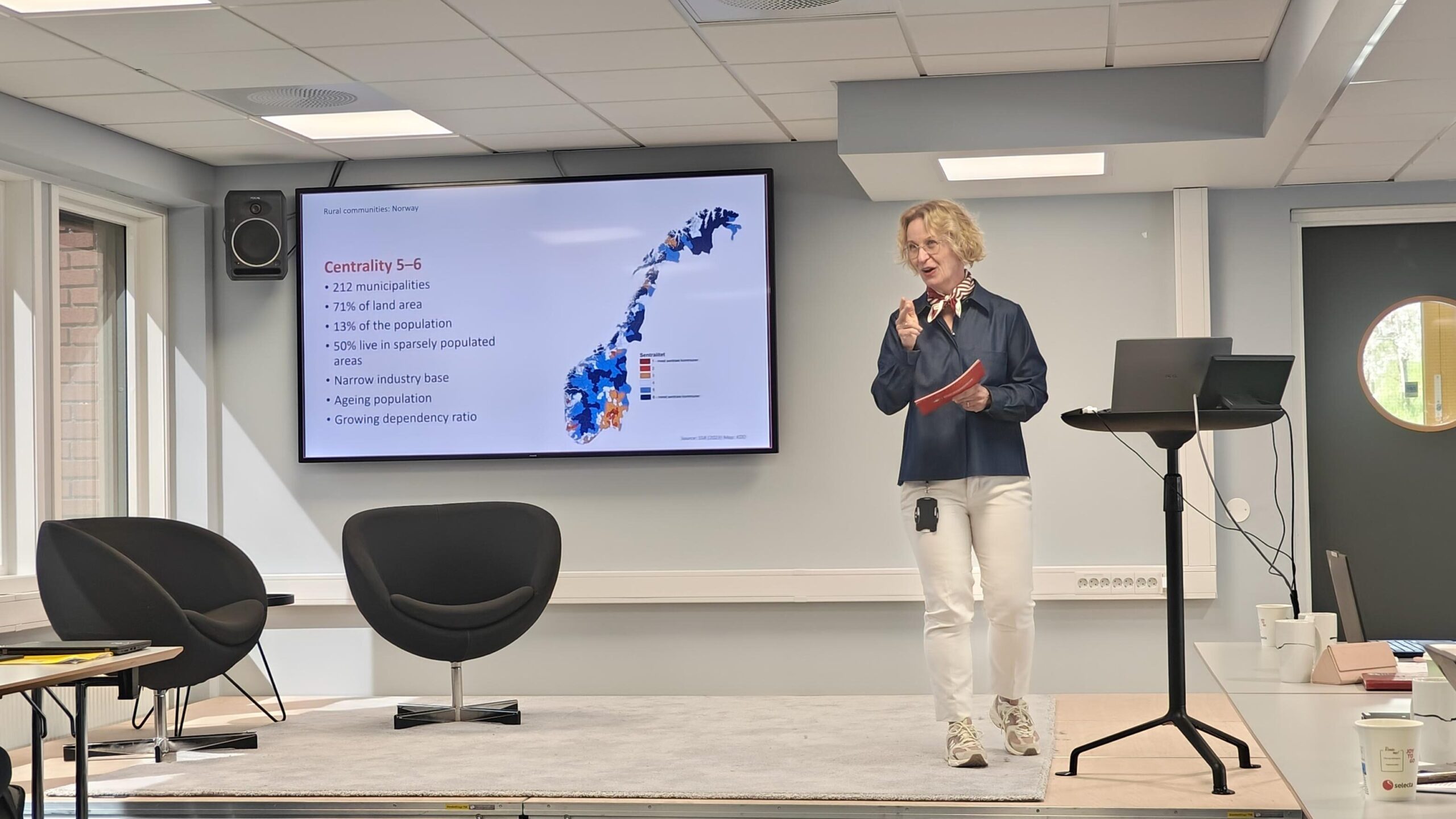
The next session shifted from crisis to youth, though the two themes are closely connected. Marit Lofnes Mellingen from Distriktssenteret presented work on young people in rural Norway. One finding stood out: many young people do want a future in rural communities. In rural municipalities, 65% of young people said they would like to live in a rural community at age 30. Their reasons were not nostalgic. They valued nature, local belonging, detached housing, less pressure and a good environment for raising children.
The policy challenge, then, is not simply to persuade young people to stay. It is to make staying realistic.
Examples from Norway pointed to practical routes: regional trainee programmes, decentralised education models, youth councils with real access to municipal decision-making, and local labour market pathways that begin before young people leave. The discussion also raised more uncomfortable issues, including gendered education patterns, parental expectations and the status attached to leaving.
Here again, the value of a Nordic exchange was not in producing a single answer. It was in comparing assumptions. Is the problem that young people do not want rural life, or that rural life is not made possible for them? Are municipalities offering participation, or only consultation? Are toolboxes useful if local administrations lack the time to use them?
Tourism, attractiveness and local limits
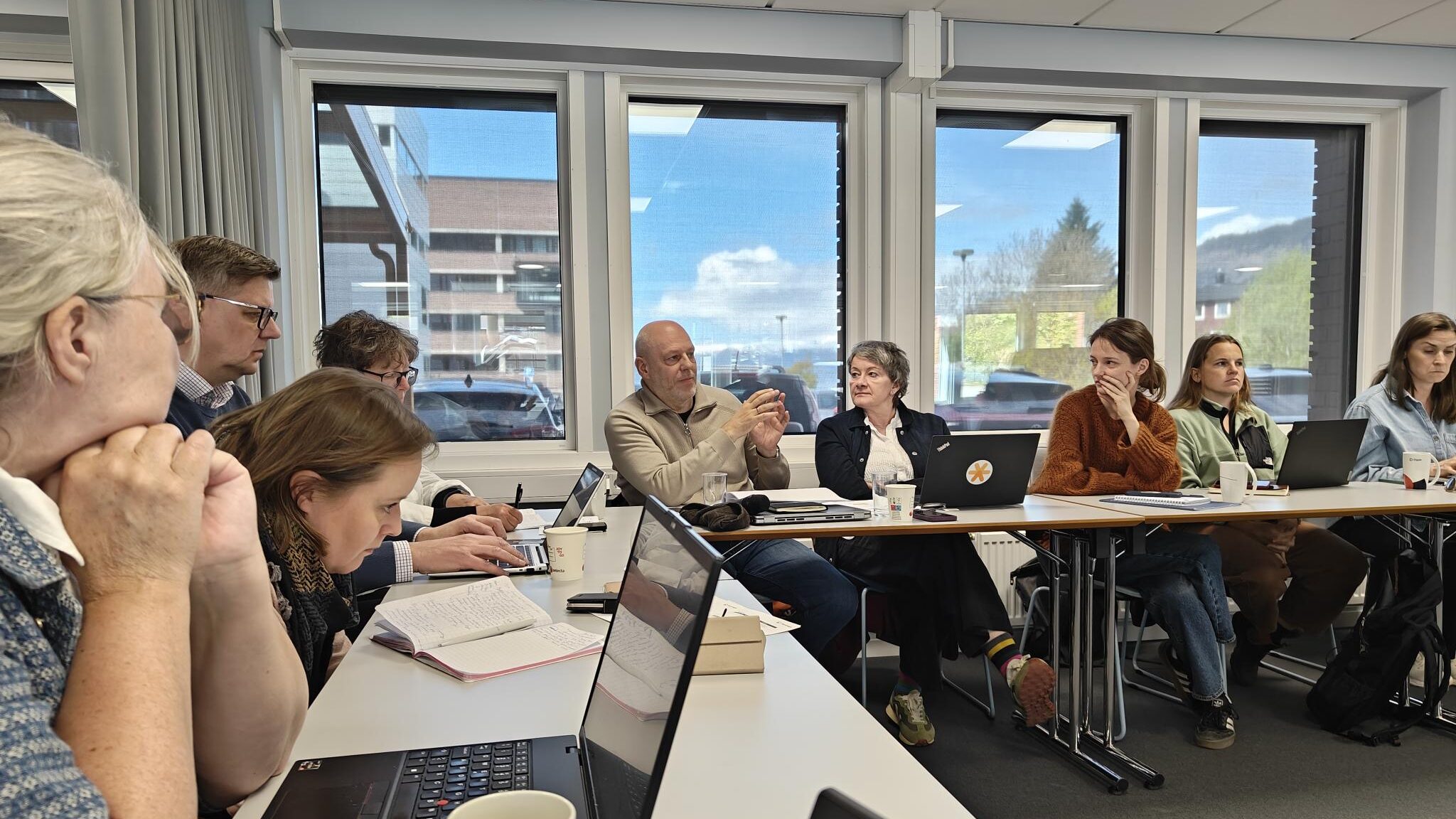
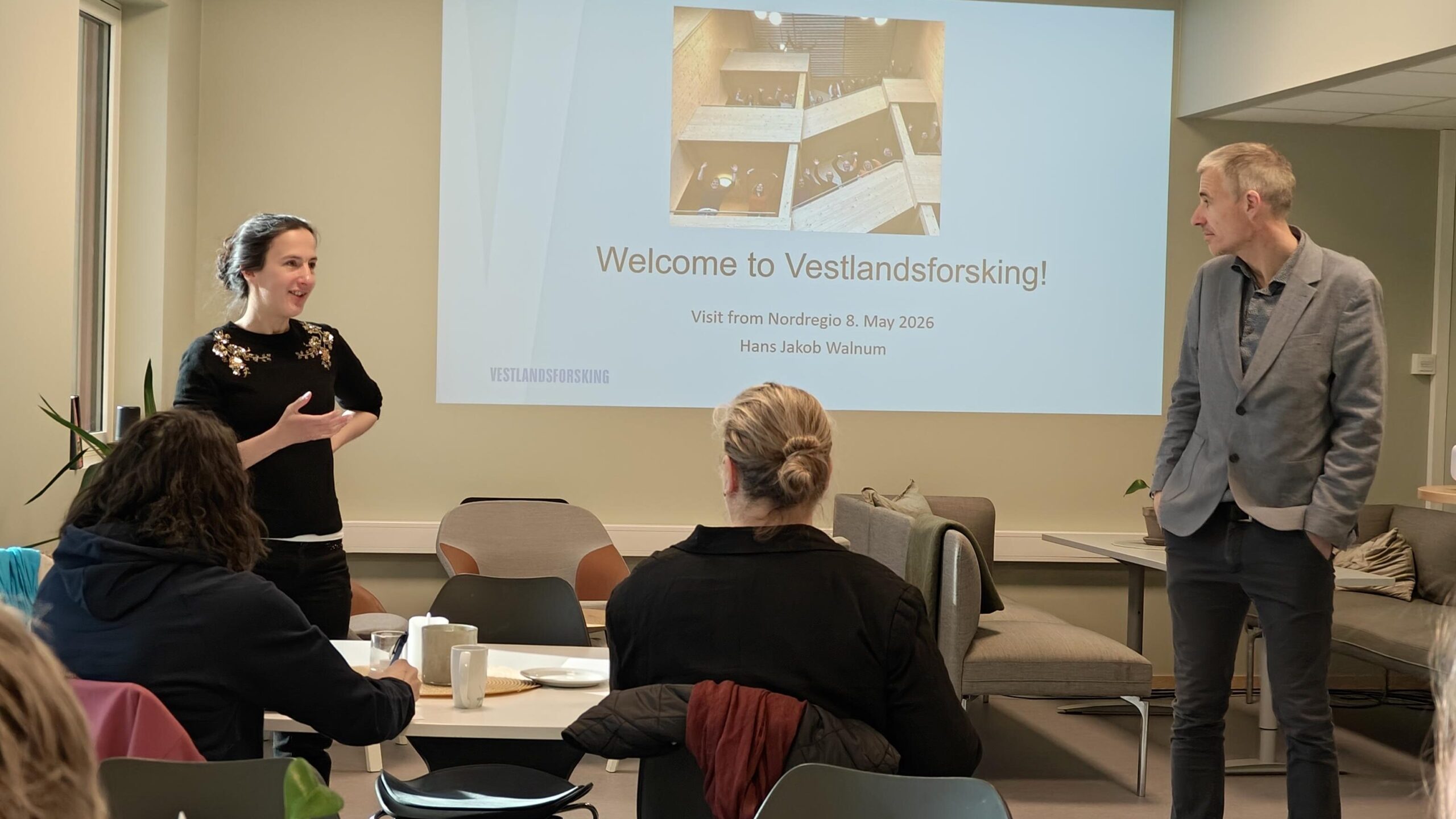
On the second day, the group visited Vestlandsforsking, where regional research, climate adaptation and sustainable tourism came into sharper focus. The institute’s work showed how a relatively small place can host a strong research environment when it is closely connected to regional needs. Their work on sustainable tourism, land use and climate adaptation is not detached from local debates. It feeds directly into them.
That became visible in Luster Municipality.
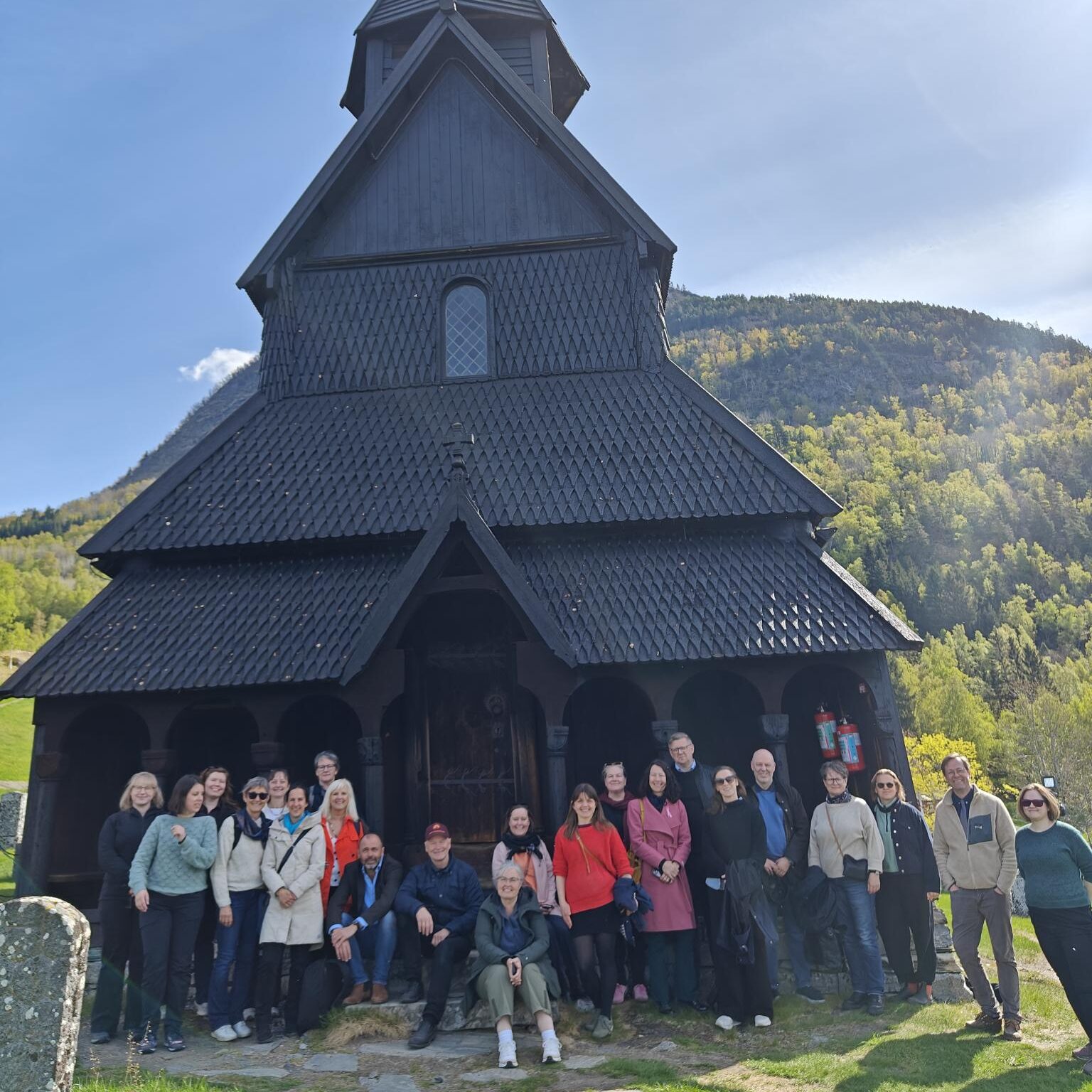
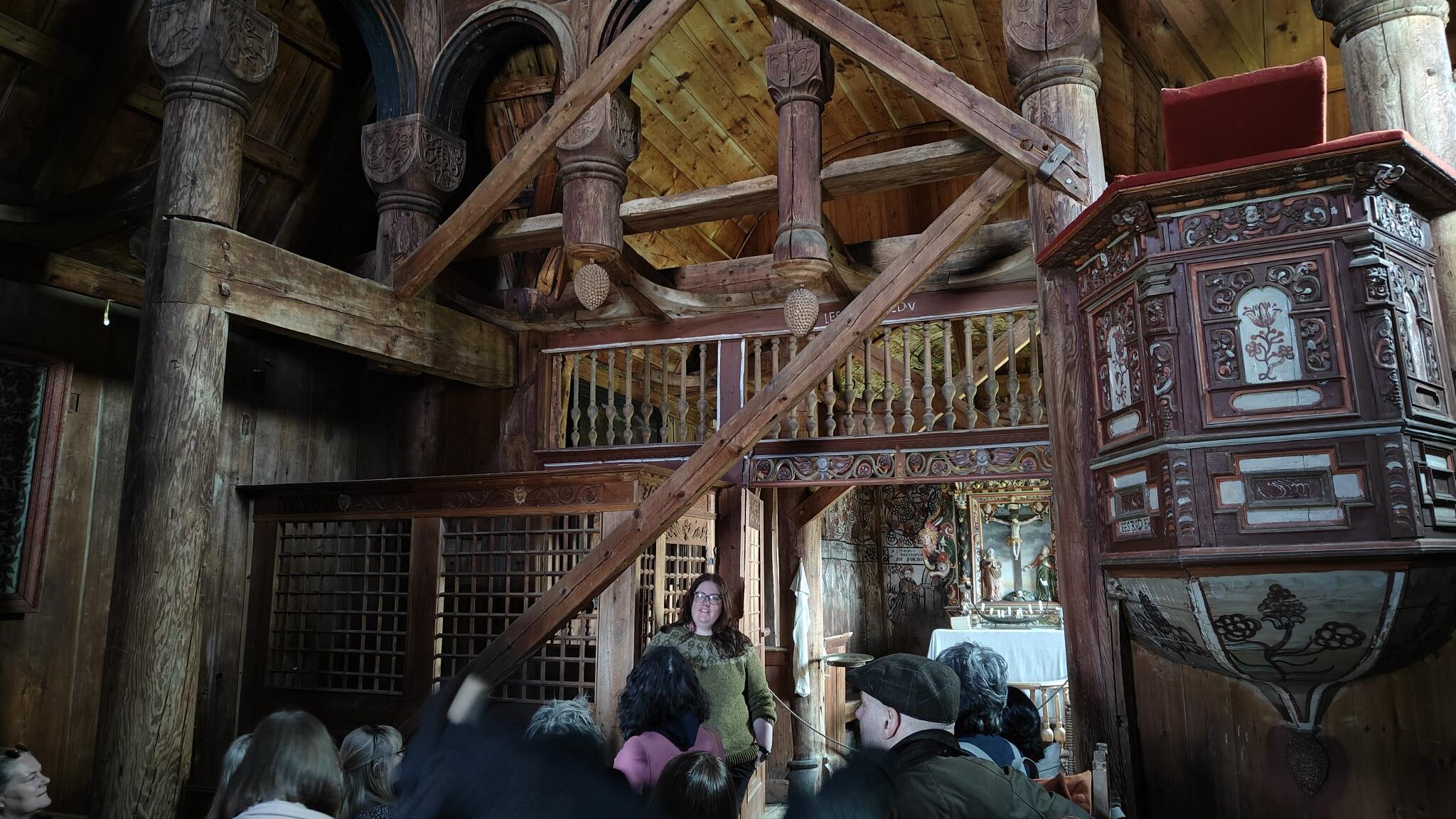
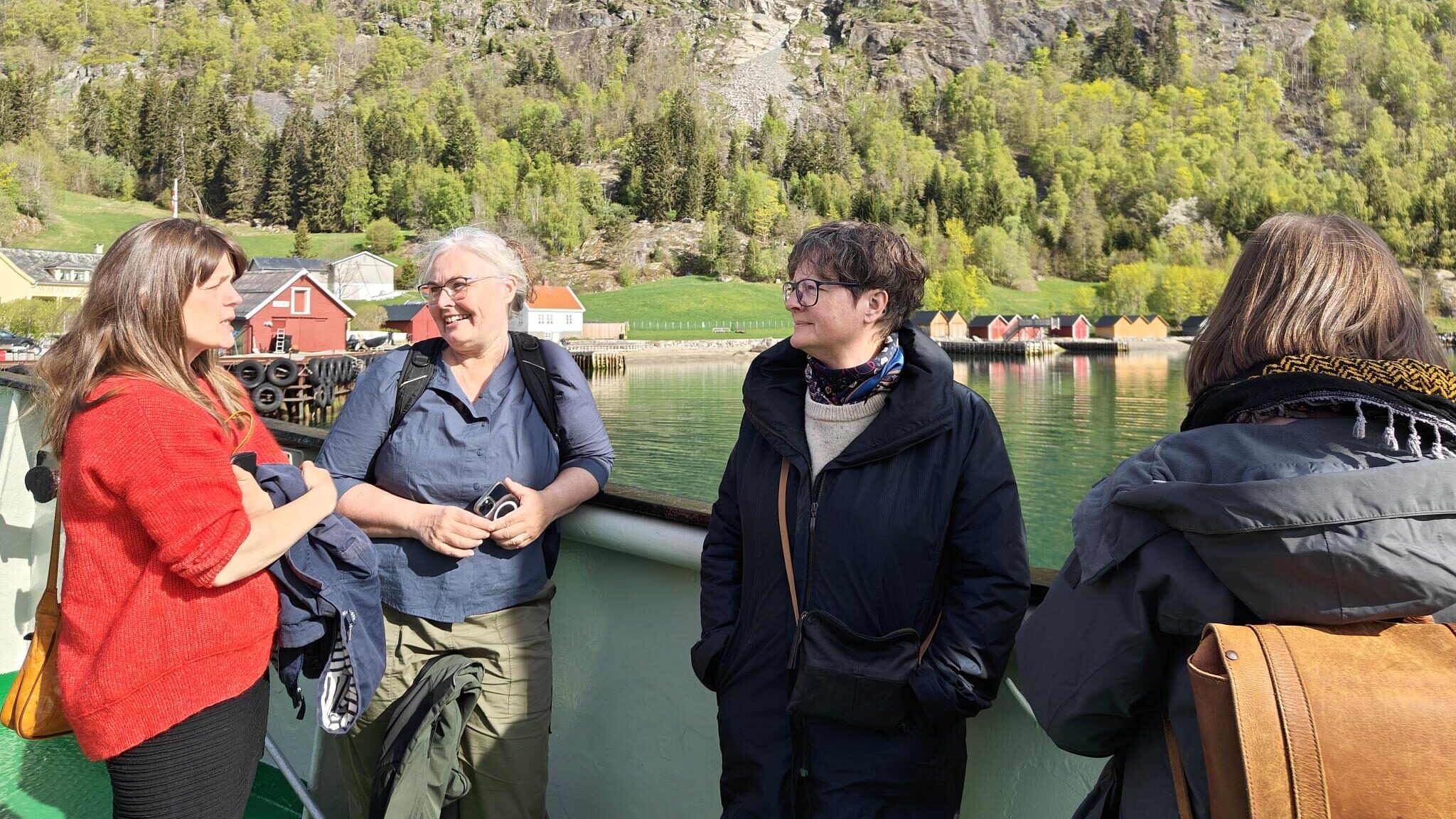
The group travelled by ferry to Ornes, visited Urnes Stave Church and met the mayor of Luster for a discussion on the balance between attractiveness for visitors and attractiveness for residents. The setting was almost too perfect: world heritage, dramatic scenery, local food, narrow roads and the growing pressure of cruise tourism.
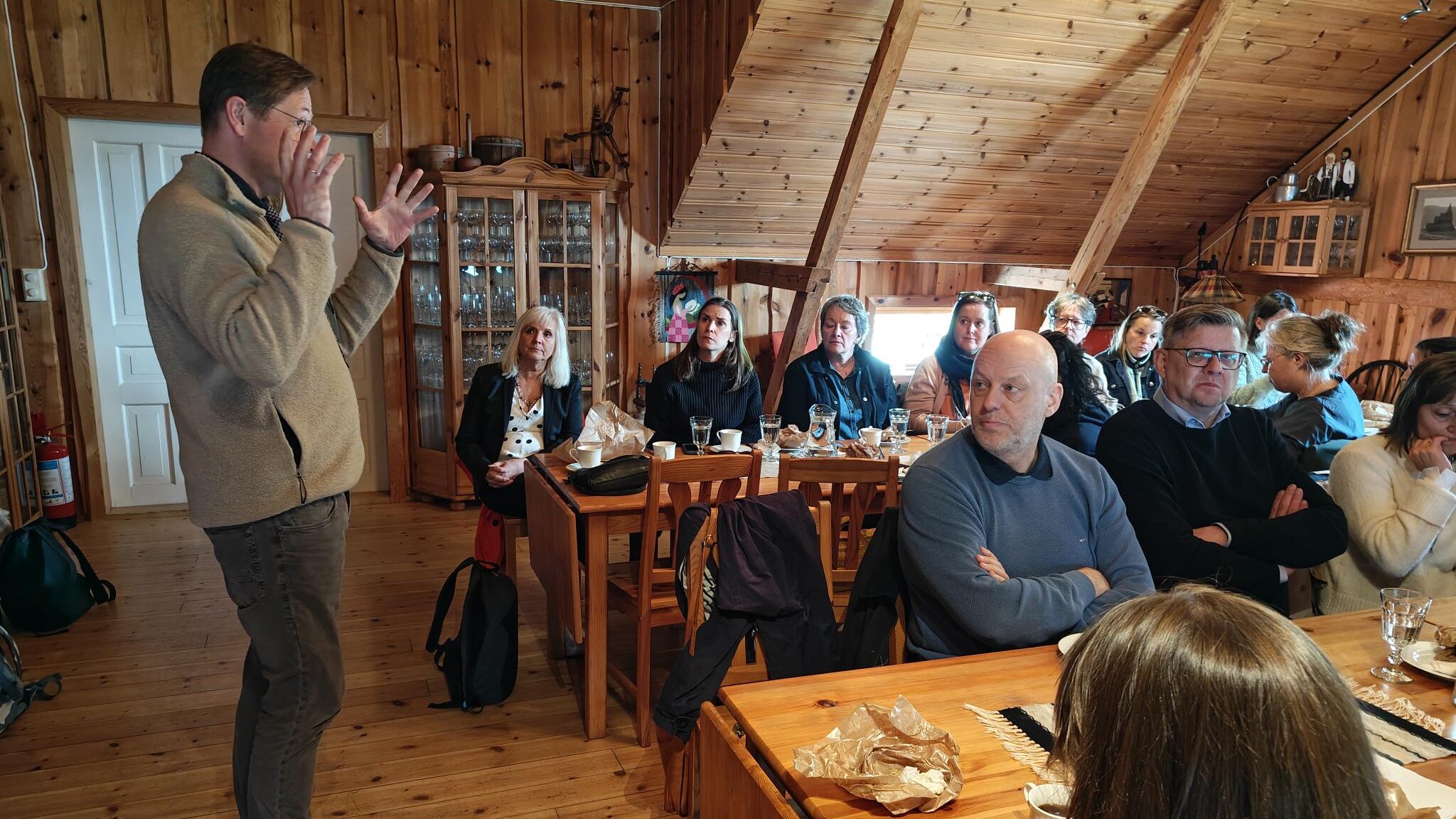
Luster wants visitors, but not at any cost. The mayor described the frustration of having too many cruise ships arrive in a small municipality where local influence over the privately owned port is limited. The conversation quickly moved from complaint to ideas: visitor management, public-private ownership models, agri-tourism, “closed for maintenance” style initiatives, and ways to spread benefits more fairly across the community.
For municipal leaders and civil servants, this is the kind of exchange that matters. Not a best practice presented on a slide, but a real dilemma discussed in the place where it is unfolding.
Why Nordic peer learning matters
The Sogndal meeting showed why field-based Nordic cooperation still has value. Regional development is place-specific. Preparedness looks different in a tunnel county than in a border region. Attractiveness means something different in a growing tourism destination than in a municipality losing young families. Youth participation is shaped by schools, jobs, housing, family expectations and transport.
But the act of comparing these realities helps decisionmakers see their own situation more clearly.
A meeting like this does not solve rural decline, climate risk or the future of Nordic preparedness. It does something more modest, and perhaps more useful. It brings people close enough to each other’s realities to ask better questions.
In Sogndal, those questions were carried from the fjord path to the meeting room, from the preparedness panel to the cider farm, from the research institute to the ferry, and from Urnes Stave Church back into the wider Nordic discussion.
That is regional learning at its best: grounded, practical and difficult to replicate online.