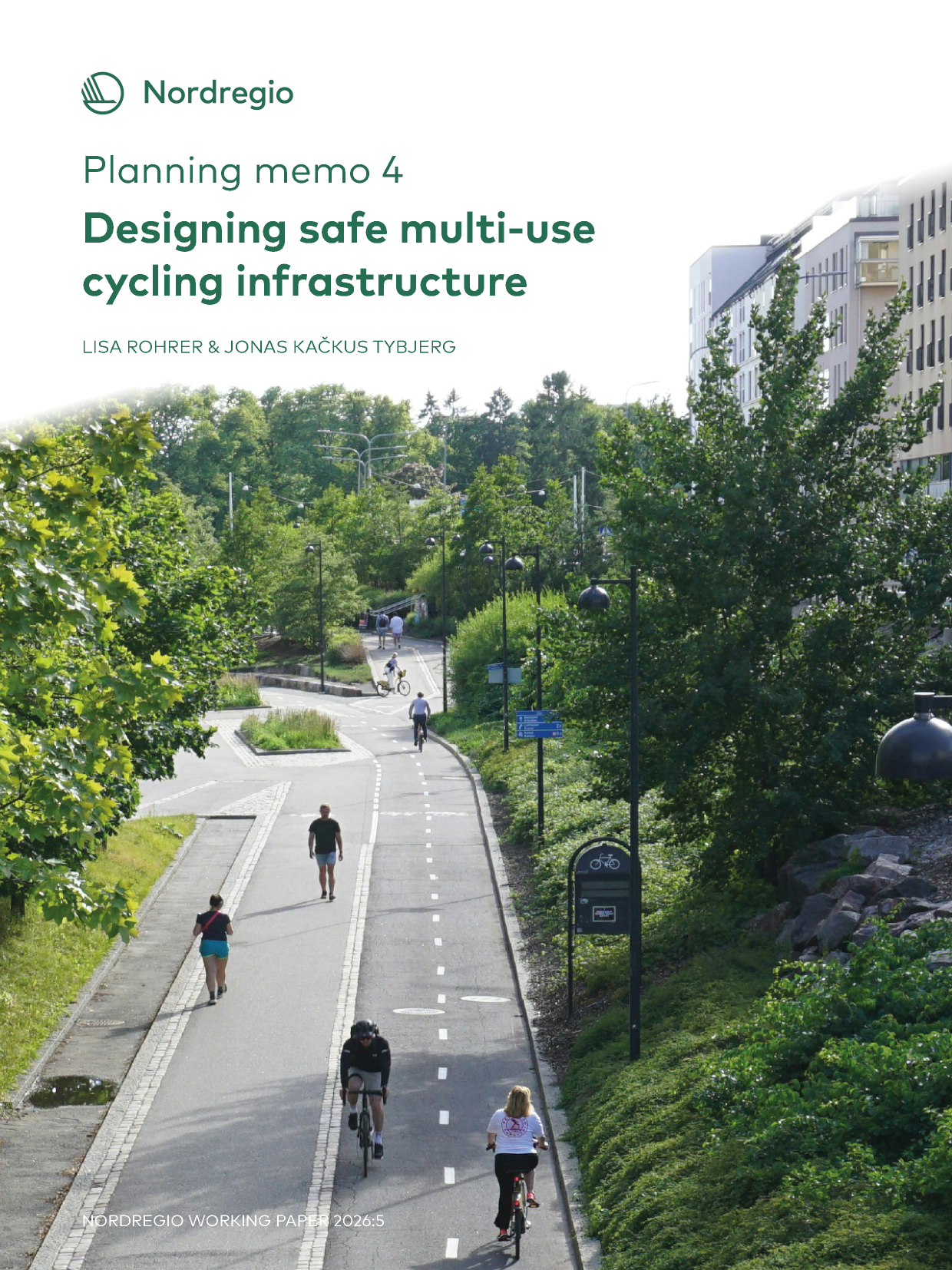
How can cycling infrastructure safely accommodate cyclists, pedestrians, and other micromobility users?
As cycling networks expand and diversify, interactions between users are becoming more complex. While discussions on cycling safety have traditionally focused on the relationship between cyclists and motor vehicles, today’s cycling infrastructure must also accommodate pedestrians, e-scooters and users travelling at very different speeds.
This fourth and final planning memo from the Nordic Cycle Network examines the opportunities and challenges associated with multi-use infrastructure and shared space design. It explores how planners can manage user interactions while maintaining safety, comfort, and accessibility.
The memo combines insights from a Nordic Cycle Network study visit to Oslo, reviews of Nordic cycling strategies and findings from the wider research literature. It discusses when separation may be appropriate, where shared space can function effectively, and how factors such as speed, behaviour and urban context influence outcomes.
Key topics include
- Shared versus separated infrastructure
- Managing different speeds and mobility needs
- Designing for both cyclists and pedestrians
- Emerging challenges linked to micromobility
- Nordic practices, including strategic examples from Oslo and the Capital Region of Denmark
About the series and the Nordic Cycle Network
This is the fourth and final publication in a series of Planning Memos developed within the Nordic Cycle Network—a network of practitioners from around 20 cities and regions across Denmark, Finland, Iceland, Norway, and Sweden. Through shared learning and exchange, the network aims to strengthen cycling policy and planning across the Nordic Region, supporting more sustainable and inclusive mobility systems.
Find the other planning memos here.