RESEARCH RESULTS
Publications
Nordregio’s publications present applied research and policy-relevant analysis on regional development across the Nordic, Arctic, and Baltic regions. Drawing on shared challenges and comparative perspectives, our research supports evidence-based decision-making and promotes Nordic added value in spatial planning, demography, governance, and sustainability.
Highlighted publications:




483 posts
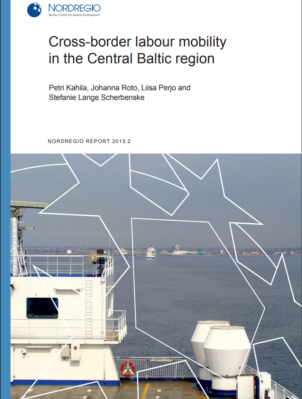


The report studies cross-border labour mobility in the Central Baltic region together with the policies and measures related to that. It provides background information on the current migration flows between…




Rural tourism has often been considered to be a remedy for rural decline, and as a tool for creating employment and economic growth. In this Working Paper researchers’ assess challenges…



In this issue of Nordregio News we focus on the discussions of how gender equality and economic development are related.

In the aftermath of the latest economic crises, the concept of “Smart specialisation” was presented to increase the efficiency in European investments in research, innovation and entrepreneurship. As the concept…

On making geographic specificity a driver for territorial development in Europe. As part of the ESPON project Geospecs delving deeper into the issue of geographic specificities and development potentials in…

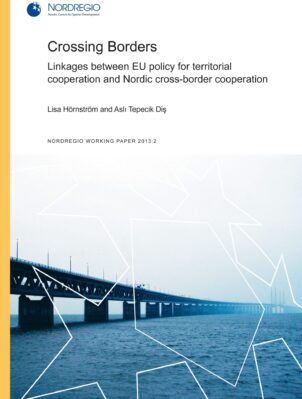


Cooperation across national borders is a means to enhance regional development and growth in border areas. Institutions, authorities and organisations on both sides of the border see that there is…


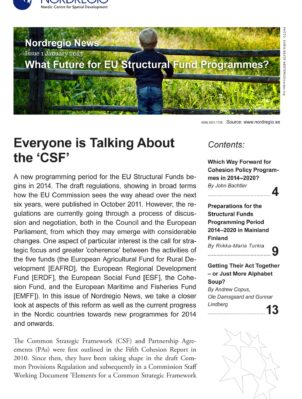

This issue of Nordregio News takes a closer look at aspects of the new programming period for the EU Structural Funds as well as the current progress in the Nordic…

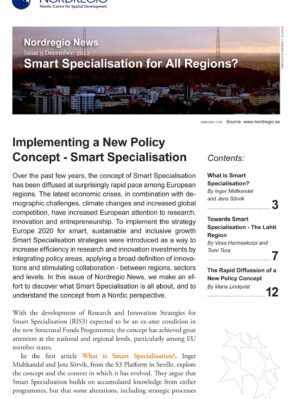
In this issue of Nordregio News we take a closer look at what Smart Specialisation entails, and consider it from a Nordic perspective.
State of the Nordic Region
State of the Nordic Region is Nordregio’s flagship publication on regional development. Published every two years, the report provides a comprehensive overview of key trends shaping the Nordic countries, regions, and municipalities. It draws on the statistical data, maps and research-based analysis and highlights key developments on demography, labour market and economy.