RESEARCH RESULTS
Publications
Nordregio’s publications present applied research and policy-relevant analysis on regional development across the Nordic, Arctic, and Baltic regions. Drawing on shared challenges and comparative perspectives, our research supports evidence-based decision-making and promotes Nordic added value in spatial planning, demography, governance, and sustainability.
Highlighted publications:




483 posts
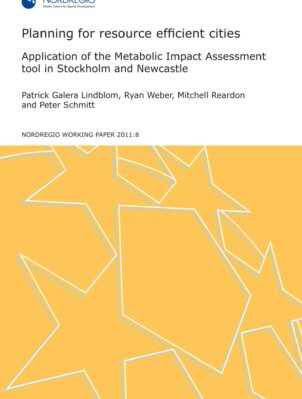


Application of the Metabolic Impact Assessment tool in Stockholm and Newcastle. This working paper is based on the results of two case studies completed by Nordregio researchers for the EU…




The synthesis report introduces a set of tools to get a better overview over the mechanisms in the demographic change. Further the connections between the research based process of analysis…




Much of rural Europe is steadily shifting away from our twentieth century conceptions. However, rural policy has been slow to adjust. There is an urgent need for a fresh approach,…


Policies, governance, development initiatives Based on discussions and presentations at seminars held by the Nordic working group 1b: Future rural areas. As part of the work of the Nordic working…

This paper aims to provide an introductory overview of territorial governance systems in the Nordic capital regions. In doing so, it focuses on the categorisation of various actors that constitute…


Nordregio Contributions to ICASS VII. Insert to Journal of Nordregio 2011:2

Climate change can be seen all over the world. In the Nordic countries, we have experienced warmer winters, stronger storms and greater precipitation, especially heavier rainfalls. Management of, and planning…
In this first issue of Nordregio News we aim to provide a better understanding of the ongoing discussion on the future European Territorial Cohesion policy; and specifically the role of…
State of the Nordic Region
State of the Nordic Region is Nordregio’s flagship publication on regional development. Published every two years, the report provides a comprehensive overview of key trends shaping the Nordic countries, regions, and municipalities. It draws on the statistical data, maps and research-based analysis and highlights key developments on demography, labour market and economy.