RESEARCH RESULTS
Publications
Nordregio’s publications present applied research and policy-relevant analysis on regional development across the Nordic, Arctic, and Baltic regions. Drawing on shared challenges and comparative perspectives, our research supports evidence-based decision-making and promotes Nordic added value in spatial planning, demography, governance, and sustainability.
Highlighted publications:




483 posts
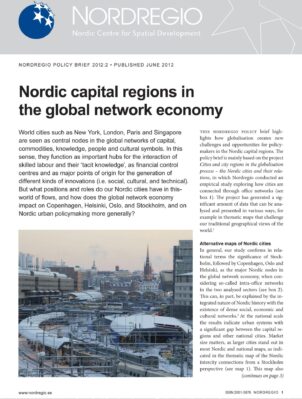


What positions and roles do our Nordic cities have in this world of flows, and how does the global network economy impact on Copenhagen, Helsinki, Oslo, and Stockholm, and on…




This working paper is published as part of the project “Regional Strategies for Green Growth and Innovation”. This working paper illustrates the relatively new and explorative nature of the green…


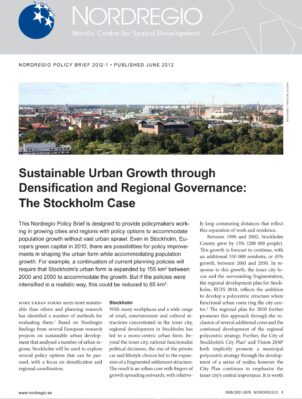

This Nordregio Policy Brief is designed to provide policymakers working in growing cities and regions with policy options to accommodate population growth without vast urban sprawl. Even in Stockholm, Europe’s…



Report from Nordic Council of Ministers’ seminar at Nordregio 29th May 2012. At the Ministerial meeting at the Arctic Council in Nuuk in May 2011 the book Megatrends was presented as…



This working paper describes the process of calculating regional input-output multipliers and presents results for Sweden as well as all Swedish counties for the latest available Swedish IO table for…

In this issue of Nordregio News we take a closer look at discussions on the role of universities and their impact on regional development.

Established notions and perceptions of the national, Nordic and even European and Global urban systems need to be challenged in order to formulate relevant future urban policies. This is one…

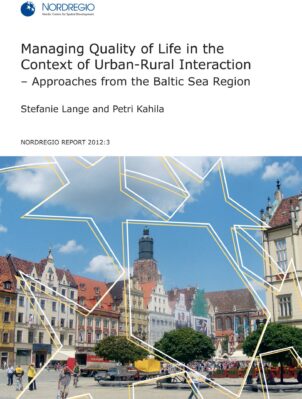
– Approaches from the Baltic Sea Region This report is the final report of the INTERREG IVB project NEW BRIDGES ‘Strengthening the Quality of Life through the Improved Management of…
State of the Nordic Region
State of the Nordic Region is Nordregio’s flagship publication on regional development. Published every two years, the report provides a comprehensive overview of key trends shaping the Nordic countries, regions, and municipalities. It draws on the statistical data, maps and research-based analysis and highlights key developments on demography, labour market and economy.