RESEARCH RESULTS
Publications
Nordregio’s publications present applied research and policy-relevant analysis on regional development across the Nordic, Arctic, and Baltic regions. Drawing on shared challenges and comparative perspectives, our research supports evidence-based decision-making and promotes Nordic added value in spatial planning, demography, governance, and sustainability.
Highlighted publications:






489 posts

The newly published Discussion paper on Digitalisation of Food Systems delves into one of the BioBaltic project focus areas, digitalisation in food systems. Part I provides a concept overview and…

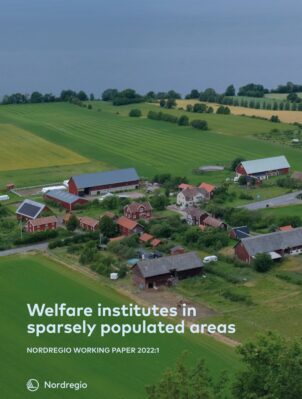

This working paper is a part of Welfare institutes in sparsely populated areas (WIiSPA) project. The overall purpose of it is to clarify and determine the definition of WIiSPA and identify…




The aim of this report is to emphasise why there is a need for a more heterogenous perspective on active and healthy ageing. A range of relevant indicators exist at…


This issue of the Nordic economic policy review surveys the economic repercussions of the pandemic and the health and economic policies introduced to minimise its impact in the Nordic countries….
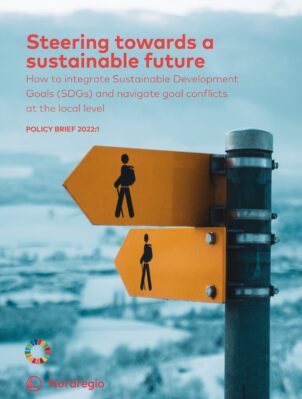


How to integrate Sustainable Development Goals (SDGs) and navigate goal conflicts at the local level This policy brief is based on the first of Nordregio’s three Localising Agenda 2030 webinars…


Developing meaningful indicators to measure local Sustainable Development Goals (SDGs) progress in the Nordics This policy brief is based on the second of three webinars on Localising Agenda 2030 in…


How to use public procurement for more sustainable municipalities This policy brief is based on the final installment of Nordregio’s three Localising Agenda 2030 webinars held in March 2022. It…


Not far from Sci-Fi, the gamble of Sami Holmström and ‘Solar Foods’ is to produce protein in a lab that could be placed in the Sahara Desert, the arctic, or…

State of the Nordic Region
State of the Nordic Region is Nordregio’s flagship publication on regional development. Published every two years, the report provides a comprehensive overview of key trends shaping the Nordic countries, regions, and municipalities. It draws on the statistical data, maps and research-based analysis and highlights key developments on demography, labour market and economy.